AI Integration in Software Development and Cybersecurity
Artificial intelligence is transforming software development from static application engineering into adaptive, intelligent, and autonomous digital infrastructure. Modern businesses are no longer asking whether AI should be integrated. They are determining how quickly they can deploy it strategically across operations.
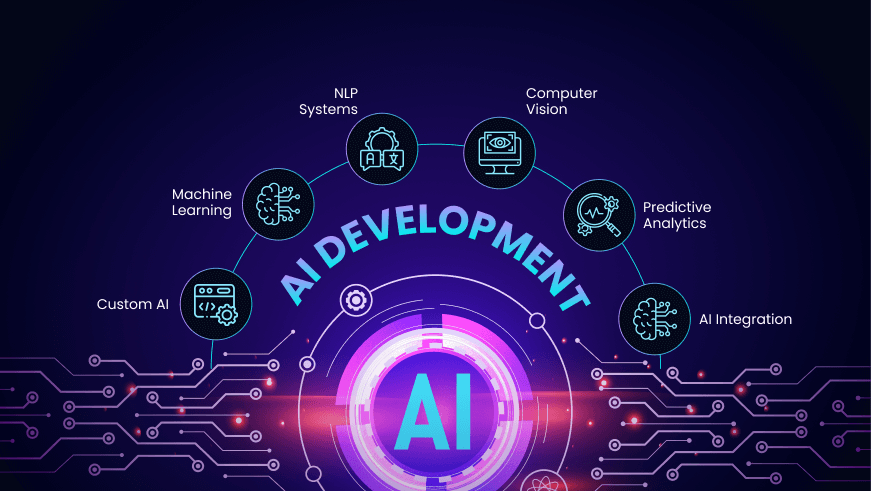
AI integration refers to embedding machine learning models, intelligent automation systems, predictive analytics, natural language processing, behavioral analysis engines, and autonomous decision-making capabilities directly into software platforms, infrastructure systems, applications, and operational workflows.
Instead of software simply executing fixed instructions, AI-powered systems can analyze patterns, predict outcomes, automate decisions, optimize operations, detect anomalies, and continuously improve performance using real-time data.
What AI Integration Means in Modern Software Development
Traditional software operates through predefined logic structures. AI-integrated systems extend beyond static workflows by introducing adaptive intelligence capable of learning from operational behavior and environmental changes.
AI can process massive volumes of data far faster than human operators while identifying patterns that would otherwise remain invisible inside complex systems.
This allows applications to automate decision-making, optimize performance dynamically, personalize user experiences, improve operational efficiency, strengthen security visibility, and reduce manual workload across business environments.
Software Development Categories Where EdgeOfContent Integrates AI
EdgeOfContent integrates AI across multiple software engineering and infrastructure categories depending on operational requirements, scalability objectives, and cybersecurity demands.
AI integration capabilities include:
• Cybersecurity and threat intelligence platforms
• Real-time behavioral monitoring systems
• Enterprise SaaS platforms
• API governance and intelligent routing systems
• Financial technology and fraud detection platforms
• Government operational intelligence systems
• Healthcare analytics and automation infrastructure
• E-commerce personalization and recommendation engines
• Smart automation and workflow orchestration platforms
• Cloud infrastructure optimization systems
EdgeOfContent focuses heavily on combining AI with sovereign infrastructure control, operational visibility, and application-layer intelligence architectures.
Why Businesses Are Integrating AI
Businesses today operate in environments defined by data scale, operational complexity, cybersecurity threats, customer expectations, and competitive pressure. Manual processes alone can no longer keep pace with modern digital operations.
AI integration allows organizations to automate repetitive workflows, analyze operational behavior continuously, optimize infrastructure performance, accelerate decision-making, and improve scalability without proportional increases in operational overhead.
Organizations integrating AI effectively gain faster operational response, improved efficiency, stronger analytics, reduced costs, and better infrastructure adaptability.
Advantages of AI Integration
AI-powered systems introduce advantages that traditional software environments cannot easily achieve through static architecture alone.
• Real-time operational intelligence
• Predictive analytics and forecasting
• Automated workflow execution
• Intelligent customer personalization
• Faster anomaly and threat detection
• Reduced operational costs
• Infrastructure optimization and automation
• Scalable decision support systems
AI also improves organizational resilience by enabling systems to react dynamically to changing operational conditions instead of depending entirely on manual intervention.
Businesses That Need AI Integration
AI integration is becoming essential across industries where operational scale, data processing, automation, cybersecurity, or customer interaction complexity continues to increase.
Businesses and sectors that benefit heavily from AI integration include:
• Financial institutions and fintech platforms
• Government and public infrastructure systems
• Healthcare providers and medical platforms
• Telecommunications companies
• Logistics and transportation networks
• E-commerce and digital marketplaces
• Cybersecurity and infrastructure providers
• SaaS and enterprise software companies
• Energy and critical infrastructure operators
Organizations managing large-scale operations, sensitive data, distributed infrastructure, or complex digital ecosystems increasingly require AI-driven automation and intelligence capabilities to remain competitive and secure.
AI Integration in Cybersecurity
Cybersecurity is one of the most critical areas where AI integration is transforming operational defense models.
Traditional cybersecurity systems often struggle to process modern attack volumes, infrastructure complexity, and behavioral threat patterns in real time. AI enables cybersecurity platforms to analyze massive operational datasets continuously while identifying anomalies, suspicious activity, malware behavior, credential abuse, and coordinated attacks automatically.
EdgeOfContent integrates AI into cybersecurity infrastructure through behavioral analytics, application-layer monitoring, adaptive threat detection, intelligent API governance, automated response systems, and sovereign operational intelligence architectures.
AI-powered cybersecurity systems can isolate suspicious sessions, detect unusual API interactions, identify malicious behavioral patterns, analyze threat correlations, and dynamically enforce policy restrictions across digital environments in real time.
This transforms cybersecurity from reactive incident response into continuous intelligent operational defense.
AI is no longer an experimental feature inside software systems.
EdgeOfContent integrates AI into software infrastructure, operational intelligence, and cybersecurity environments to create adaptive systems capable of learning, defending, optimizing, and scaling continuously in real time.