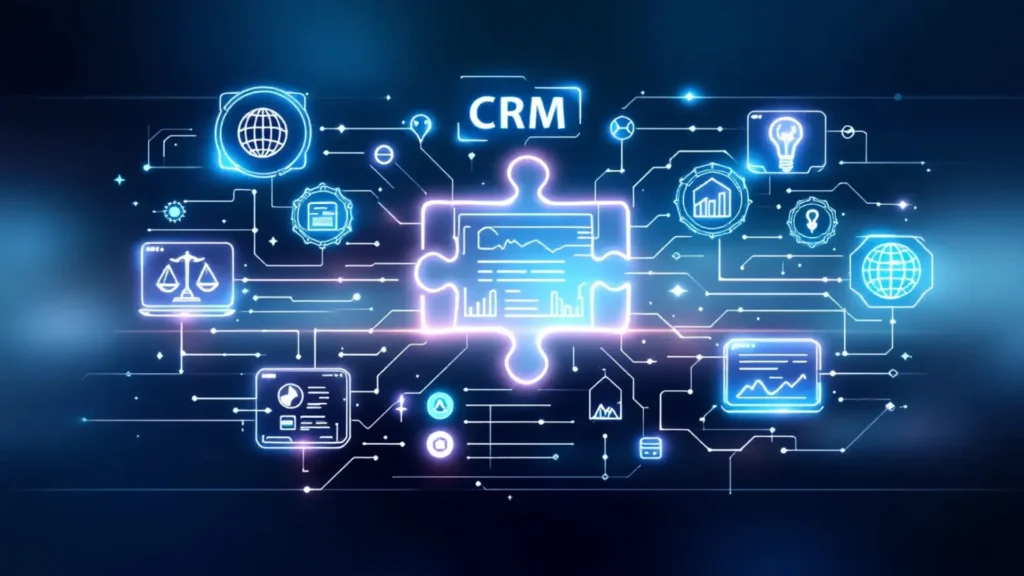
CRM Development Guide for Startups and Enterprises
How modern CRM systems improve scalability, automation, customer retention, and operational efficiency.
Customer relationships are one of the most valuable assets any business can build.
As startups and enterprises grow, managing customer data manually becomes inefficient, fragmented, and difficult to scale.
This is why modern businesses increasingly invest in CRM development.
A powerful CRM system centralizes customer operations, improves team productivity, and creates scalable workflows capable of supporting long-term growth.
“A CRM system is no longer just a sales tool — it is the operational backbone of modern business growth.”
What is a CRM system?
CRM stands for Customer Relationship Management.
CRM software helps businesses organize, automate, and optimize customer interactions across multiple operational departments.
- Sales management
- Lead tracking
- Customer support
- Marketing automation
- Workflow management
- Analytics and reporting
Modern CRM systems are designed to improve operational efficiency while increasing customer retention and revenue visibility.
Why startups need CRM systems early
Many startups delay CRM implementation until operations become difficult to manage.
This often creates operational inefficiencies and fragmented customer data.
- Disorganized sales pipelines
- Lost customer information
- Weak follow-up systems
- Manual operational bottlenecks
- Limited business visibility
Early CRM adoption helps startups scale operations more efficiently from the beginning.
Core features of modern CRM systems
- Lead and customer management
- Sales pipeline tracking
- Automated workflows
- Task and team management
- Email and communication integration
- Customer analytics dashboards
- Role-based access systems
- API integrations
CRM systems evolve into centralized operational platforms capable of supporting multiple departments simultaneously.
Custom CRM vs third-party CRM platforms
Many businesses begin with third-party CRM tools before transitioning into custom systems.
Third-party CRM platforms provide:
- Faster setup
- Lower initial costs
- Basic operational workflows
However, custom CRM development provides:
- Full workflow flexibility
- Scalable architecture
- Advanced integrations
- Custom automation systems
- Operational ownership
- Long-term scalability
As companies scale, custom CRM systems often become strategic operational assets.
The importance of scalability in CRM development
CRM systems must evolve alongside business growth.
- Growing customer databases
- Expanding operational teams
- Increasing workflow complexity
- Cross-platform integrations
- Multi-department coordination
Weak CRM architecture can slow operations and create expensive rebuilding challenges later.
Why UI/UX matters in CRM systems
CRM systems are used daily by teams across multiple departments.
Poor UI/UX reduces operational efficiency and slows adoption.
- Clear dashboard systems
- Fast navigation workflows
- Responsive interfaces
- Real-time visibility
- Operational simplicity
Modern CRM systems prioritize usability as much as functionality.
Cloud-native CRM infrastructure
Modern CRM systems increasingly rely on cloud-native architecture for flexibility and scalability.
- Remote accessibility
- Real-time synchronization
- Scalable infrastructure
- Improved system reliability
- Automated deployment workflows
Cloud-native infrastructure allows CRM systems to scale globally without operational limitations.
How Edge of Content builds scalable CRM systems
Edge of Content develops scalable CRM platforms, SaaS systems, cloud-native applications, and custom operational software designed for startups and enterprises.
- Custom CRM development
- Modern UI/UX systems
- Cloud-native infrastructure
- API-first backend architecture
- Workflow automation systems
- Performance-focused engineering
We help businesses build CRM systems designed to improve operational efficiency, scalability, and long-term growth.
Modern CRM systems are more than operational tools.
They are scalable business infrastructure designed to improve customer relationships, automation, and long-term operational performance.