En
En Fr
Fr العربية
 BI
BI 中文
中文 РФ
РФSoftware Development Truths & Myths
Human Translation vs. Machine Translation in Software Development – Which one is more Accurate
Machine translation can convert words. But language is not just words
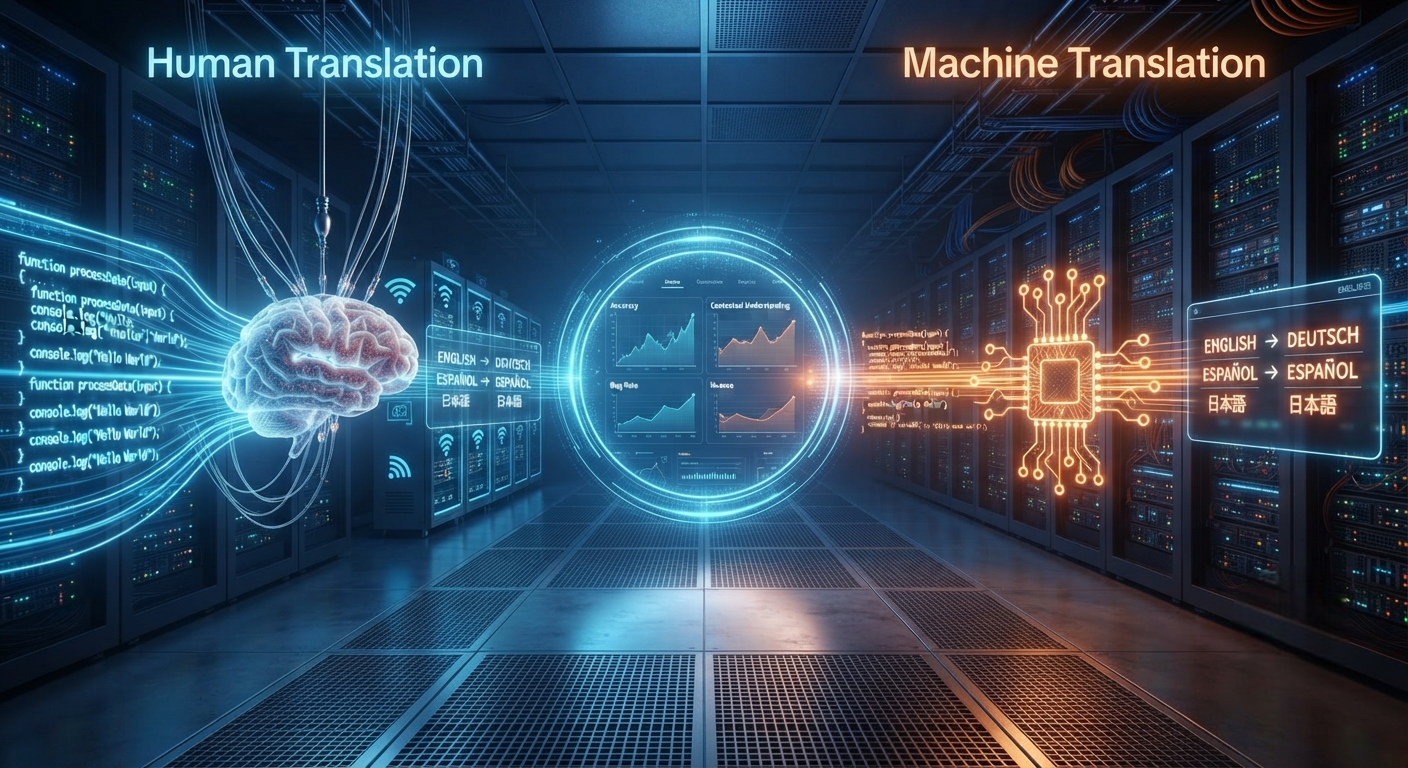
Real communication involves tone, emotion, culture, psychology, rhythm, intent, branding, search behavior, and human understanding. This is why human translation and machine translation are fundamentally different technologies — even if modern AI tries to blur the line.
At EdgeOfContent, we understand this difference deeply because our own platform was manually translated into multiple languages by humans — not by Google Translate plugins or automatic AI-generated translation systems.
EdgeOfContent Was Manually Localized Into Multiple Languages
Unlike many modern websites relying entirely on instant machine translation widgets, EdgeOfContent.com was manually translated and localized into:
- English
- French
- Spanish
- Arabic
- Russian
- Indonesian
- Portuguese
Every version required manual adaptation, content restructuring, SEO adjustments, UX considerations, and cultural localization.
We intentionally avoided fully automated translation plugins because they often create:
- Broken sentence structures
- Incorrect terminology
- Awkward brand messaging
- Literal translations without context
- Poor readability
- SEO inconsistencies
- Localization errors
- Damaged user trust
A sentence can be technically translated and still completely fail to communicate.
Translation Is Not Just About Language
One of the biggest misconceptions in global digital marketing is believing translation simply means replacing words from one language into another.
Real localization goes much deeper.
Human translators understand:
- Why a sentence is written a certain way
- How emotional tone changes across cultures
- What sounds natural to local audiences
- How humor and persuasion differ internationally
- What phrasing creates trust
- How search behavior changes by language
- Which expressions feel authentic
- How branding perception varies globally
Machines process patterns.
Humans understand meaning.
SEO Translation Requires Human Understanding
One of the biggest failures of automatic translation systems is SEO localization.
SEO is not about translating keywords literally.
Real multilingual SEO requires understanding:
- Search intent
- Regional keyword behavior
- Local phrasing
- Cultural search patterns
- Industry terminology
- User psychology
- Regional competition
For example, the way users search for:
- Software development services
- Web design agencies
- Bali real estate
- SEO consulting
- Business automation
…changes dramatically depending on the country, language, and culture.
A direct machine translation often creates keywords nobody actually searches for.
Human localization aligns content with how real humans think and search.
RTL Languages Require Real UX Adaptation
Another area where machine translation often fails is RTL (Right-to-Left) language support.
Supporting Arabic properly, for example, is not just flipping text direction.
True RTL implementation affects:
- Layout hierarchy
- Navigation flow
- Spacing systems
- Typography alignment
- Animation direction
- UX consistency
- Mobile responsiveness
- Readability
At EdgeOfContent, multilingual website architecture involves real frontend adaptation — not just automated text injection.
AI Translation Still Has Major Limitations
Modern AI tools and translation systems have improved dramatically.
They are excellent assistants for:
- Draft translations
- Internal understanding
- Fast reference
- Simple communication
- Basic multilingual support
But AI still struggles heavily with:
- Cultural nuance
- Persuasive writing
- Brand tone consistency
- Localization psychology
- Contextual ambiguity
- Creative messaging
- Emotion-driven copywriting
- High-conversion marketing language
This is why many AI-translated websites feel robotic, unnatural, repetitive, or emotionally empty — even when grammatically correct.
Localization Builds Trust
Global businesses often underestimate how strongly users react to poorly localized websites.
A badly translated website instantly damages:
- Brand credibility
- Professional perception
- User trust
- Conversion rates
- SEO performance
- International expansion
On the other hand, professionally localized platforms create familiarity and trust because users feel the brand actually understands them.
That emotional connection cannot be automated completely.
Why Human Translation Still Matters
At EdgeOfContent, we believe global digital growth requires more than technical translation.
It requires:
- Human understanding
- Cultural intelligence
- SEO localization
- Multilingual UX adaptation
- Strategic communication
- International branding consistency
Whether we are building multilingual SaaS platforms, global business websites, international SEO campaigns, or localized digital infrastructures, our approach focuses on communication that feels native — not machine-generated.
Final Thoughts
Machine translation can process language.
Human translators understand people.
And in branding, marketing, software, SEO, UX, and international business — that difference changes everything.
Translation is not just converting words. It’s transferring meaning, emotion, and trust across cultures.
Build a Truly Global Digital Presence with EdgeOfContent
Looking for multilingual website development, international SEO, localization, software development, branding, or scalable digital infrastructure in Bali or globally?
We help businesses create localized digital ecosystems designed for real human communication — not robotic translation shortcuts.
Start Your Global Digital Strategy