
THE REALITY
BEHIND BUZZ WORDS
WHAT THEY DON’T TELL YOU
IS THAT REALITY DOESN’T SELL
The misleading info and ads
of AI building apps in 6 minutes
Read About It!
The promise sounds tempting—but it’s pure marketing fiction. AI doesn’t magically replace product thinking, architecture, security, or scalability in six minutes. These ads sell shortcuts while ignoring the real work: defining logic, handling edge cases, integrating systems, and maintaining code long-term. What you end up with isn’t an app—it’s a fragile demo that breaks the moment real users touch it.
On top of that, AI cannot build a complete application end-to-end. Debugging real issues, managing service connections, handling APIs, authentication, infrastructure, data flows, and production environments all require human judgment and experience. These aren’t optional steps—they’re the core of real software. AI can assist and accelerate developers—but it cannot replace them.
And let’s be direct: if you see an ad or promotion claiming AI can build you a full, customized app—whether in six minutes or even six days—that’s a scam. The goal is simple: take your money. What you’ll receive is usually a locked, pre-made template with no real logic, no scalability, and little to no ability to customize or maintain it. It’s not software—it’s a placeholder sold as a product.
Real apps are built by people. AI is a tool—not a miracle.
“2-MINUTE AI WEBSITES”
ARE JUST TEMPLATES
Read About It!
These so-called “2-minute AI websites” aren’t real websites—they’re pre-made templates with your logo and text swapped in. No architecture, no performance tuning, no SEO structure, no scalability, no real customization. Just a generic layout that looks decent for five minutes and collapses the moment you need something specific.
And then reality hits. You open the “finished” site and discover 10 pages waiting for you, each one packed with full paragraphs of Lorem Ipsum. Suddenly, that “2 minutes” turns into hours of manual editing—and that’s when you realize it was never AI magic, just a marketing lie.
A real website requires strategy, structure, optimization, security, and maintenance. AI can help speed things up, but it can’t replace planning or engineering. If it sounds too fast to be true, it probably is 😏
WEB APP ≠ NATIVE APP
Read About It!
A web app and a native app are not the same—and treating them as interchangeable is a costly mistake. Web apps run in the browser, limited by its performance, APIs, and access to device features. Native apps are built specifically for an operating system, giving full control over performance, hardware access, offline behavior, animations, and system-level integrations.
This difference impacts everything: speed, UX, security, scalability, and long-term maintenance. A web app can be fast to launch and cheaper upfront, but a native app delivers smoother experiences, deeper integrations, and better reliability at scale. Choosing one over the other isn’t about trends—it’s about understanding the product, the users, and the technical constraints.
Same word “app.” Completely different realities.
PAYING THOUSANDS
FOR BAD CGI & UGC —
WHY?
Read About It!
Up to that point, we show you, for free, how to create high-level ads and content using AI and smart tools—without burning your budget. Instead of paying thousands for UGC and CGI that often misses the mark, you can produce visuals that actually perform for under $30. Same impact, more control, faster iteration—and quality that doesn’t collapse once the hype fades.
REALLY?!
QUANTUM COMPUTER?

Read About It!
Let’s be serious for a second. A quantum computer isn’t a laptop. It isn’t a desktop. It’s not even a “PC” in the way people imagine. A real quantum computer is a room-scale system—roughly 10×10 meters—filled with cryogenic equipment, extreme cooling, shielding, and hardware that operates near absolute zero. No CPUs, no RAM sticks, no motherboards like you know them. This is a completely different class of machine.
Second: you don’t buy one. Quantum computers are owned and operated by governments, research institutions, and a handful of corporations. Access is provided via the cloud, and even that can cost tens of thousands of dollars per month—sometimes under $100K, sometimes more—depending on usage.
So when you see ads claiming they’re “selling quantum computers” or a “quantum processor PC,” that’s not innovation—that’s deception. At best, you’re getting classical hardware with a marketing label slapped on it. At worst, it’s a straight-up scam designed to take your money.
Real quantum computing is rare, expensive, and highly controlled. If someone is selling it like a gadget, they’re lying.
GRANDMA VIDEO
THE HOLLY CONTENT

Read About It!
Too many people confuse digital marketing with posting random videos and throwing hashtags everywhere. Even worse, they use hashtags without research, without tools, without strategy—and then proudly call it “SEO.” That alone shows the misunderstanding. SEO lives on websites, on structure, content, performance, and search intent—not on random social posts.
This lack of knowledge is exactly why scams and misleading services exist. And that’s why we’re calling it out—not just to protect our name as software developers, but to protect the good professionals too. There has to be a clear line between real expertise and pure deception.
Content creation isn’t a low-effort video made with a free app, a visible watermark, irrelevant music, and visuals that have nothing to do with the product. Posting it on Facebook without paid distribution on Meta or Google and calling it “advertising” doesn’t make it marketing. It’s not digital marketing. It’s not content strategy. It’s not advertising.
Real digital marketing is data, targeting, creatives with intent, platforms used correctly, budgets allocated strategically, and results measured. Anything else is noise—and calling it “professional” is just lying.
HUMAN TRANSLATION ≠
MACHINE TRANSLATION
Read About It!
Machine translation can convert words, but it doesn’t understand meaning. It misses tone, context, cultural nuance, humor, and intent—the very things that make language human. A human translator knows why something is said, not just what is written. That’s the difference between sounding correct and being understood.
On top of that, there’s RTL support, SEO, and real localization—areas where machines still fall short. Handling right-to-left languages isn’t just flipping text; it affects layout, hierarchy, UX, and readability. SEO isn’t about literal translation either—it’s about search intent, keywords, phrasing, and how real people look for things in their own language. Localization means adapting messaging, references, tone, and structure to fit a specific culture, not just a dictionary.
Google Translate and even modern AI can help, but they can’t be perfect here—because to get this right, you need to be human. Understanding people, markets, and context is something machines still can’t replicate.
AFRAID OF LINUX.
CLUELESS ON WINDOWS.

Read About It!
A lot of people say they’re “afraid” of Linux—yet they barely know how to use Windows properly. They struggle to format a page, manage files, or understand basic system settings, but still talk like Linux is “too complex.” The truth? Linux isn’t scary—it’s open-source, faster, more secure, and often simpler than Windows once you actually use it.
Meanwhile, many of these same people are running cracked or cheap illegal Windows software, thinking they’re saving money. What they don’t realize is that this is exactly how you invite backdoors, spyware, and remote access into your system. You’re not in control—someone else is. Your data, your activity, your machine can be watched, modified, or exploited without you ever knowing.
Linux doesn’t spy on you. It doesn’t hide what it’s doing. You can see the code, control the system, and actually own your computer. Being “afraid” of Linux isn’t about difficulty—it’s about unfamiliarity. And staying on insecure, pirated software isn’t convenience—it’s a risk.
AI IS NOT THE VILLAIN
IT’S JUST A TOOL
Read About It!
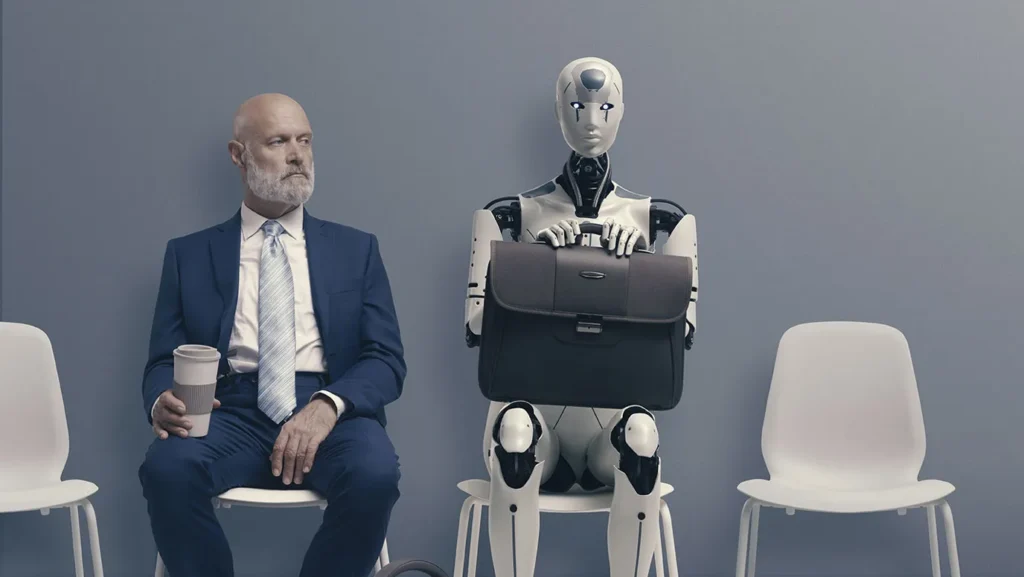
People keep saying that AI will replace humans, steal jobs, and cause mass unemployment. But this fear isn’t new—and it’s not accurate. We heard the same thing when Google Translate appeared. We heard it when robotics entered factories decades ago. Every time technology evolves, the panic repeats.
AI isn’t the villain. It doesn’t decide, think, or create value on its own—it executes. It amplifies whoever is using it. In skilled hands, it accelerates work. In unskilled hands, it produces nothing meaningful.
And let’s be honest: if someone isn’t able to find work today, that problem existed before AI. AI didn’t take it away. It simply exposed gaps in skills, adaptability, and strategy. Like every major technological shift, AI doesn’t eliminate humans—it raises the bar.
AI is a tool. Nothing more. Nothing less.