En
En Fr
Fr العربية
 BI
BI 中文
中文 РФ
РФ8 Benefits of a Warehouse Management System for Companies
A warehouse management system (WMS) is a critical asset for companies that need accurate inventory control, efficient logistics, and scalable operations. By digitizing and automating warehouse processes, businesses can significantly improve performance, reduce costs, and gain full visibility across their supply chain. At Edge of Content, a Bali-based software development, cybersecurity, SEO, and digital growth agency, we develop custom WMS solutions designed to deliver measurable operational and financial impact.
1. Real-Time Inventory Visibility
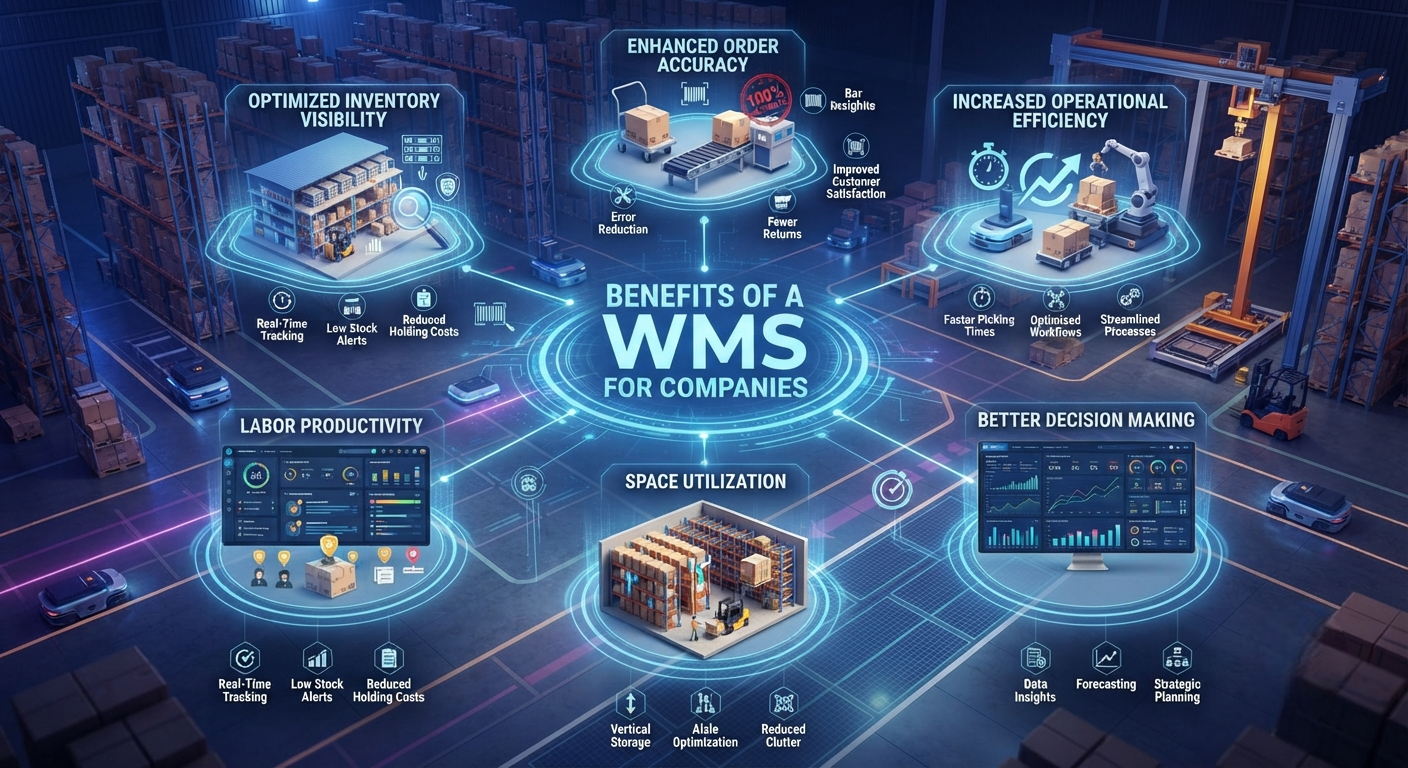
One of the primary benefits of a warehouse management system is real-time inventory visibility. Companies can track stock levels, locations, and movements instantly, eliminating guesswork and reducing the risk of stockouts or overstocking. This level of accuracy ensures better planning and more reliable order fulfillment.
2. Improved Operational Efficiency
Another key advantage is improved operational efficiency. A WMS automates core warehouse activities such as receiving, picking, packing, and shipping. By reducing manual processes and human error, businesses can increase speed and accuracy while lowering operational costs.
3. Enhanced Order Accuracy
Order accuracy is significantly enhanced with a WMS. Features such as barcode scanning, automated validation, and optimized picking routes ensure that the right products are selected and shipped correctly. This leads to fewer returns, higher customer satisfaction, and stronger brand trust.
4. Cost Reduction
Cost reduction is a major driver for WMS adoption. By optimizing storage space, reducing labor inefficiencies, and minimizing inventory losses, companies can lower overall warehouse operating expenses while improving productivity.
5. Scalability for Business Growth
Scalability is another important benefit. As businesses grow, a well-built WMS can handle increased inventory volumes, additional warehouse locations, and more complex logistics workflows without compromising performance. This allows companies to expand operations without rebuilding their systems.
6. Data-Driven Decision Making
Enhanced data and reporting capabilities provide valuable insights into warehouse performance. Businesses can analyze inventory turnover, order processing times, and operational bottlenecks, enabling data-driven decisions that improve efficiency and profitability.
7. Seamless System Integration
Integration capabilities allow a WMS to connect seamlessly with other business systems such as ERP, accounting software, eCommerce platforms, and logistics providers. This creates a unified ecosystem where data flows efficiently across all departments, improving coordination and reducing delays.
8. Enhanced Control and Transparency
Finally, a warehouse management system strengthens overall business control and transparency. With centralized data, automated workflows, and real-time tracking, companies gain full oversight of their operations, allowing them to respond quickly to changes in demand, supply chain disruptions, and market conditions.
At Edge of Content, we design and develop warehouse management systems tailored to each company’s operational needs, ensuring secure, scalable, and high-performance solutions that support long-term growth and efficiency.
Ready to Transform Your Warehouse Operations?
Implementing a Warehouse Management System is one of the most impactful investments your business can make. Whether you’re managing a single warehouse or a complex multi-location operation, the right WMS solution delivers immediate improvements in accuracy, efficiency, and profitability—while building a foundation for sustainable growth.
EdgeOfContent IT Consulting combines deep technical expertise with practical business understanding to deliver custom WMS solutions that work for you. From initial assessment and solution design through development, integration, training, and ongoing support, we ensure your warehouse transformation delivers measurable results.
Don’t let manual processes, inventory errors, or operational bottlenecks limit your business potential. Take the next step toward operational excellence.
Contact EdgeOfContent today for a free consultation and discover how a custom Warehouse Management System can optimize your supply chain, reduce costs, and drive business growth.
Transform Your Warehouse Operations Today
A custom Warehouse Management System from EdgeOfContent delivers real-time visibility, automation, and scalability—transforming your warehouse into a strategic asset that drives efficiency, accuracy, and business growth.
Whether you’re looking to optimize inventory control, reduce operational costs, or scale for future expansion, our WMS solutions are designed to meet your specific requirements. Let’s build the system that will power your logistics operations for years to come.
EdgeOfContent Warehouse Management Solutions