
 En
En Fr
Fr العربية
 BI
BI 中文
中文 РФ
РФMVP Development
&
Prototyping
From Vision to Validation
Robust and high-availability minimum viable products | Modular monolith architectures | Native API structures | Deep third-party system integrations
4-6 Wks
Avg. Time to Interactive Alpha
100%
API-First Architecture
Zero
Throwaway Code Frameworks
Framework Pillars & System Specs
Engineered for rapid validation without structural compromise. We implement production-grade infrastructure architectural blueprints designed to survive immediate hyper-growth scenarios
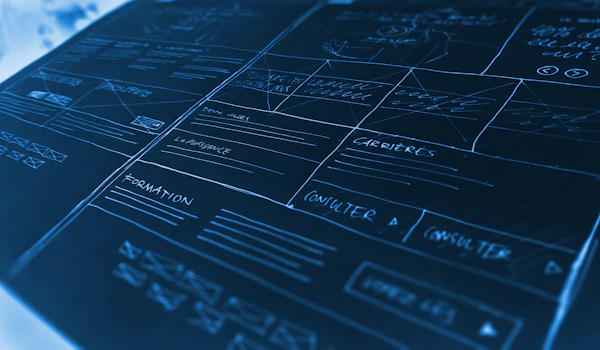
Modular Monolith Foundation
Eliminates premature microservice complexities while retaining strict, encapsulated logical boundaries between core business modules. Ensures accelerated development cycles with trivial pathways to distributed microservice migrations down the road

API-First Scalability Architecture
Treats the core backend engine strictly as an independent service tier interface. Deploys versioned, secure REST endpoints documented programmatically from day one, allowing web apps, third-party hooks, and cross-platform mobile environments to connect effortlessly
Native Database & Geo-Spatial Engines
Leverages PostgreSQL coupled with comprehensive spatial extensions to handle intense transactional queries, complex relational schema mapping, and native geographic queries. Built out to handle high-availability logistics and location metrics instantly
Rapid validation stacks, low-code foundations, and interactive blueprint environments
Minimum Viable Product (MVP)
An MVP is a business strategy and testing process, not a specific piece of software. While the result of an MVP in the tech industry is often a functional, stripped-down application, the concept itself is about validating business assumptions with the absolute least amount of effort and cost.
Depending on the stage of validation, an MVP can actually take many non-software forms.
The Evolution of an MVP
An MVP shifts forms depending on what a business needs to prove:
Common Non-Software MVPs
Landing Pages
Many founders test market demand before writing a single line of code. They set up a basic webpage detailing the software’s value proposition with a “Join the Waitlist” button. If thousands of people sign up, it validates demand.
The “Wizard of Oz” Method
The front-end looks like fully automated software, but human beings handle all the tasks manually behind the scenes. For example, Zappos started with the founder taking photos of shoes in local stores, posting them online, and manually buying and shipping them when someone ordered.
The Concierge MVP
Providing the core service to a small group of customers manually and explicitly as a service, rather than through an automated platform. This helps founders understand exact user workflows and pain points before engineering the software.
No-Code / Low-Code Prototypes
Leveraging existing everyday tools like Google Sheets, Airtable, Typeform, or automation platforms like Zapier to string together a working system without building custom code.
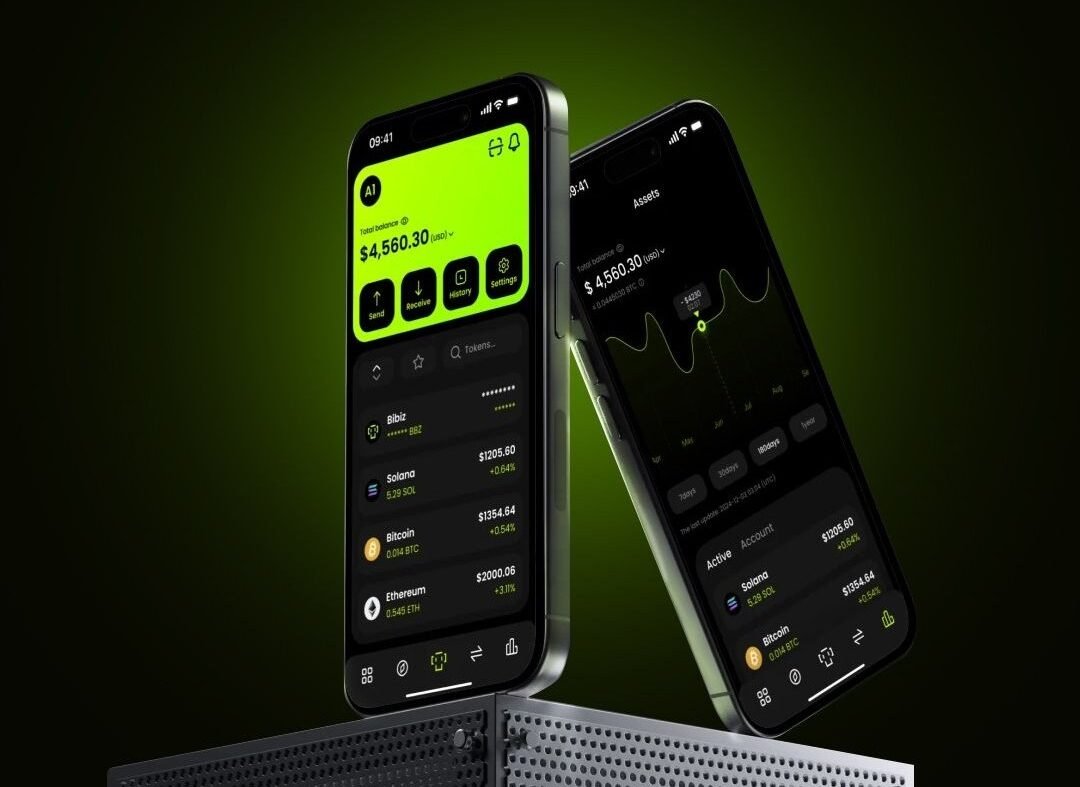
Startup Development
We build high-performance Minimum Viable Products (MVPs) and scalable web software systems engineered for rapid market deployment and fast customer acquisition. Our development strategies focus on validating your core product logic, reducing initial operational risks, and constructing clean technological infrastructure that scales efficiently as user traction increases
MVP Development & Deployment
Engineering core product features rapidly to accelerate market validation, capture early user reviews, and establish business traction
Scalable Software Foundations
Constructing lightweight, optimized backend server systems designed to support rapid feature additions and user expansion milestones
Rapid System Iteration
Setting up automated code delivery pipelines to update your platform instantly based on direct user data feedback loops
MVP Development & Prototyping Lifecycle
An aggressive, milestone-driven roadmap for MVP Development & Prototyping designed to take highly sophisticated tech concepts to functional deployment velocity
Structural Analysis & MVP Modeling
We begin by stress-testing product mechanics, constructing strict entity-relationship diagrams, mapping relational constraints, and optimizing indexing strategies within PostgreSQL to ensure your initial MVP Development & Prototyping lifecycle has a stable foundation
High-Fidelity MVP Development & Prototyping
Translating conceptual workflows into component-driven interactive layouts. We construct programmatic UI kits built for zero-friction user flows, ensuring frontend asset schemas match back-end data formats cleanly during the prototyping cycle
Core Security & MVP Business Logic
Assembling the core computing engine. We script robust server logic layers, instantiate isolated data tables, hook up third-party micro-transactions, and wire encrypted data communication channels into your MVP from day one
Frontend Assemblies & Prototyping Integration
The system converges here. We build fast, high-performance web and mobile views, binding responsive interfaces directly to the core back-end server rails via optimized state-management controllers for a release-ready build
Pre-Launch MVP Audits & Load Balancing
Penetration Testing Checkpoints
Rigorous security evaluations testing endpoint vulnerabilities, cross-site injection resistance, and role-based access token overrides before network broadcast
Interactive Swagger Endpoint Mapping
Self-documenting interactive gateway structures enabling external system engineering hooks to immediately query, test, and integrate with backend routines
Ready to execute your MVP Development & Prototyping timeline?
Launch MVP PrototypingSoftware Scaling Strategy: Structured Growth From Concept To Ecosystem
Phase 1
Proof of ConceptValidation of technical feasibility and business logic.
Phase 2
Base Model LaunchOperational deployment designed for traction and ROI.
Phase 3
Software ScalingEnterprise-grade architecture, automation, and integrations.
Build Software Designed To Scale
Partner directly with a modern development agency focused on scalable systems, automation infrastructure, and long-term digital growth.
Start Your ProjectThe Production-Grade Infrastructure Stack
We bypass brittle non-scalable scaffolding tools in favor of standardized, highly supportable enterprise technological pipelines
Frontend & Interface Layer
Built with Next.js/React and Tailwind CSS. We deliver optimized compilation routines, decoupled layout state stores, component assemblies matching strict UI definitions, and rapid responsive viewport handling
Backend & Computation Layer
Engineered using Node.js/TypeScript alongside PostgreSQL (PostGIS). Features structural ORM data mapping routines, safe relational lookup isolation levels, versioned API gateways, and asynchronous background worker thread allocation pools
Operations, DevOps & Global Edge CDN
Orchestrated inside Docker runtime containers connected to AWS routing infrastructures. Protected by cloud firewall rules with automated SSL provisioning and content distribution networks pushing system responses straight to global edge nodes
Audit the full baseline framework documentation before writing a single line of code
Inspect Stack BlueprintMVP & Prototyping Scope Perimeters
Defining explicit feature parameters to guarantee rapid delivery metrics while maintaining absolute production-grade data standards during MVP Development & Prototyping
MVP Security & Governance Layers
Identity Management & Role Hierarchies
MFA & OAuth2 Dynamic Implementations
Cryptographically secure access tokens using JSON Web Tokens (JWT) reinforced with automated device verification handshakes.
Multi-Country View Isolation Setup
Granular row-level data segregation at the database level to ensure cross-border operational compliance and regional tenancy security.
Transaction & Marketplace Engines
Enterprise MVP Transaction Engines
Hybrid Enterprise Multi-Vendor Marketplace
Unified catalog registries featuring deep transactional variant tracking, customized professional quotation engines, and isolated merchant storefronts
Programmatic Commissions & Payout Splits
Automated payment escrow routing that executes calculated platform fees and instant multi-party vendor distributions via programmatic API rails
Mobile Prototyping & Field Operations Matrix
Field Automation Pipelines
Intelligent Dispatch & PostGIS Routing
Native spatial data query optimization protocols executing geospatial resource dispatching and real-time transit paths
Android Low-Tier Offline Synchronization
Local SQLite fallback storage structures featuring background queues that seamlessly reconcile device changes with core systems once connectivity returns
Deploy a tailored MVP Development & Prototyping blueprint for your specific product vertical
Lock The MVP PerimeterArchitectural Blueprints in Action
Examining production environments engineered to scale from initial alpha releases straight through multi-regional enterprise market capture
Pan-African Multi-Services: Case Study
Challenge: Cross-Border Diaspora Pipeline
The client required a unified infrastructure capable of binding international diaspora transactions directly to localized physical supply chains, multi-vendor B2B inventory pipelines, and autonomous distributed solar grids operating under volatile low-connectivity conditions across regional UEMOA parameters
Resolution: 22-Week High-Availability Rollout
We engineered an encapsulated modular monolith architecture deploying automated split-payout escrow algorithms alongside a dedicated PostGIS asset routing engine. Integrated zero-loss SQLite background database replication sync queues, guaranteeing reliable offline field operations for localized agents

Review the comprehensive structural blueprints behind our live product systems
Access Engineering BriefsStrategic Deliverables & Technical Warranties
We enforce rigorous transition standards and operational support guarantees, protecting your code assets completely from day one
Fully Documented Repositories & Databases
Your team retains total software IP dominance. We hand over clean Git version tracks containing comprehensive inline declarations, detailed environment build scripts, modular Docker files, and unified database schema dependency blueprints
Complete Post-Launch Technical Support SLA
Ensuring system stability through critical validation milestones. We stand by your deployment via formal service level terms covering active software performance tuning, priority server anomaly triage, and comprehensive structural architecture reviews
Initiate an enterprise-grade prototyping roadmap with clear technical execution terms
Kickoff Next The SprintLock down your development lifecycle parameters. Let’s convert your product roadmap into production-grade source code
Start The SprintSystem Operations & Protocol FAQ
Clear operational logic regarding timelines, financial structure, asset assignment, and architectural integrity
What is the standard delivery timeline for an MVP?
Our typical development cycle yields an interactive, production-grade alpha layout within 4 to 6 weeks. The exact timeline relies strictly on the finalized boundary perimeter configurations established during the initial design phase
How is the project payment schedule structured?
Financial milestones are explicitly mapped to our engineering pipeline stages. Processing splits consist of a 20% commitment allocation upon contract signing, followed by two 30% milestone execution distributions, and a final 20% balance clear on final project delivery
Who owns the source code and infrastructure assets?
Full intellectual property rights belong exclusively to the client. We do not retain or hold host over source codes. Complete git repositories, root server configurations, and underlying hosting account assets are entirely transferred to your system operators at the moment of final project delivery
Do you use template pre-builds or resell existing project code?
Never. We engineer every software ecosystem completely from scratch. This custom, zero-template methodology eliminates technical debt and conflicting legacy code dependencies, serving as our operational secret to rapid delivery speeds and high-quality stability
What warranties and technical guarantees do you provide?
Every deployment is backed by a formal post-launch Technical Support SLA. This guarantees proactive server stabilization tuning, system optimization checks, and immediate bug mitigation handling throughout your critical launch validation timeline
Have an architectural logic question not outlined here?
Consult System Engineers