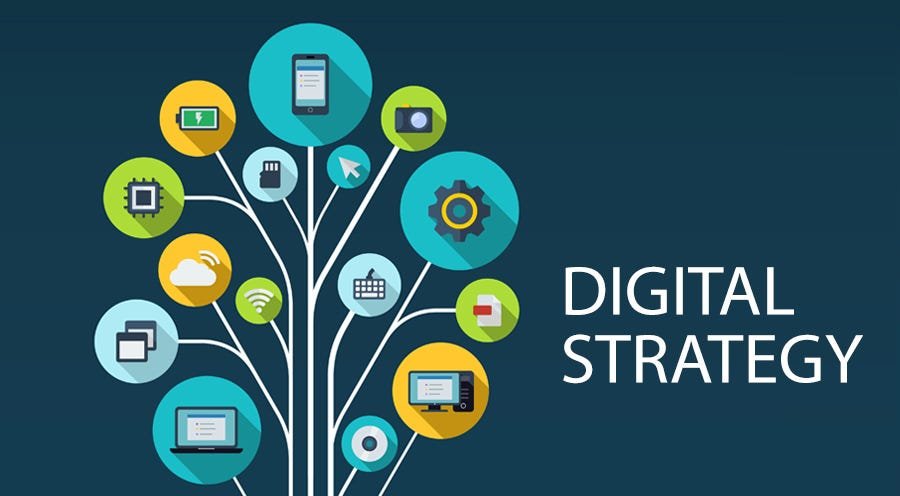
Digital Strategy, Business Intelligence, and the Future of Digital Growth
Modern organizations no longer compete only through products or services. They compete through infrastructure intelligence, operational speed, data visibility, automation capability, cybersecurity resilience, and digital adaptability. This is where digital strategy becomes one of the most important foundations of long-term business growth.
Businesses today operate inside highly interconnected digital ecosystems involving cloud infrastructure, customer platforms, APIs, analytics systems, AI services, communication channels, operational software, cybersecurity environments, and distributed data systems.
Without a strong digital strategy, organizations often scale inefficiently, lose operational visibility, struggle with fragmented systems, and fail to adapt quickly to technological and market changes.
What Is Digital Strategy?
Digital strategy is the structured process of designing how technology, infrastructure, data, automation, cybersecurity, AI systems, and digital operations support long-term organizational growth and operational resilience.
It goes far beyond building websites or adopting software tools. A true digital strategy defines how an organization uses technology to improve efficiency, scale operations, strengthen security, optimize decision-making, improve customer experiences, and maintain competitive advantage.
Digital strategy aligns infrastructure, operational processes, intelligence systems, and business objectives into a unified technological growth model.
Why Digital Strategy Matters
Organizations today generate massive operational complexity through digital interactions occurring across applications, cloud systems, customer environments, financial systems, supply chains, APIs, and communication platforms.
Without strategic coordination, businesses often experience fragmented workflows, operational inefficiency, weak cybersecurity visibility, duplicated infrastructure costs, disconnected analytics, and slow decision-making.
A strong digital strategy creates operational clarity by defining how systems interact, how data flows, how infrastructure scales, and how digital environments remain secure and adaptive over time.
Businesses with mature digital strategies are typically more resilient, more scalable, faster to innovate, and better positioned to respond to market changes and technological disruption.
The Relationship Between Digital Strategy and Business Intelligence
Business intelligence transforms raw operational data into actionable decision-making insight. Digital strategy determines how that intelligence is collected, structured, analyzed, secured, and operationalized across the organization.
Without digital strategy, business intelligence systems often become fragmented reporting tools with limited operational impact. Without business intelligence, digital strategy lacks the real-world visibility needed for adaptive growth and informed decision-making.
The relationship between both is deeply interconnected:
• Digital strategy creates the infrastructure architecture
• Business intelligence creates operational visibility
• AI systems create predictive intelligence
• Automation creates scalability
• Cybersecurity creates operational trust and resilience
Together, these systems form the operational nervous system of modern organizations.
Digital Growth Depends on Infrastructure Intelligence
Sustainable digital growth is not simply about attracting more users or expanding online presence. It depends on whether infrastructure, operations, security systems, data environments, and automation architectures can scale intelligently without creating instability.
Organizations that grow rapidly without operational intelligence often encounter performance bottlenecks, cybersecurity exposure, inefficient workflows, rising infrastructure costs, and fragmented customer experiences.
Digital growth therefore depends heavily on visibility, optimization, intelligent automation, predictive analytics, and adaptive infrastructure governance operating together continuously.
What EdgeOfContent Brings to Modern Digital Strategy
EdgeOfContent combines advanced infrastructure intelligence, AI-powered monitoring, application-layer visibility, cybersecurity governance, operational analytics, and adaptive digital architecture into unified digital strategy ecosystems.
Instead of treating infrastructure, security, AI, automation, analytics, and operational monitoring as isolated systems, EdgeOfContent integrates them into interconnected operational intelligence environments designed for modern digital scale.
EdgeOfContent solutions include:
• AI-driven business intelligence systems
• Application-layer operational visibility
• Real-time cybersecurity monitoring
• Intelligent API governance and analytics
• Infrastructure optimization architectures
• AI-powered behavioral analytics
• Sovereign cloud and digital governance models
• Intelligent automation ecosystems
These systems help organizations improve scalability, operational awareness, digital resilience, infrastructure efficiency, customer intelligence, and long-term growth capability.
The Future of Competitive Organizations Is Operational Intelligence
Future-leading organizations will not simply own software. They will operate intelligent digital ecosystems capable of learning, adapting, defending, automating, and scaling continuously.
Competitive advantage increasingly depends on how effectively organizations combine infrastructure intelligence, AI systems, cybersecurity visibility, automation architecture, and strategic operational data into unified digital growth systems.
Digital strategy is therefore no longer optional business planning. It has become a foundational architecture for long-term organizational survival, resilience, and expansion in a technology-driven economy.
Modern growth is driven by intelligence, visibility, automation, and infrastructure control.
EdgeOfContent helps organizations build intelligent digital ecosystems through AI-powered strategy, operational analytics, cybersecurity governance, infrastructure optimization, and real-time business intelligence architectures designed for scalable digital growth.