A Warehouse Management System (WMS) is a core operational platform that enables businesses to control, automate, and optimize warehouse processes with precision. For companies managing inventory, logistics, or manufacturing workflows, a WMS provides real-time visibility, reduces errors, and improves efficiency across the entire supply chain. By replacing manual processes with structured digital systems, businesses gain speed, accuracy, and scalability in their operations.
The key features of a WMS focus on inventory accuracy and operational control. Real-time inventory tracking allows businesses to monitor stock levels, locations, and movements instantly. Barcode and QR code scanning improve accuracy during receiving, picking, and shipping processes. Warehouse mapping and bin location management ensure that goods are stored and retrieved efficiently. Automated stock alerts and replenishment systems help prevent stockouts and overstocking, while reporting dashboards provide insights into inventory turnover, order status, and operational performance.
A well-structured WMS is built through multiple modules that handle specific functions within the warehouse. The inventory management module serves as the core, maintaining accurate records of all stock across locations. The inbound module manages goods receiving, quality checks, and stock allocation. The outbound module handles order processing, picking, packing, and shipping workflows. Order management modules ensure that customer orders are processed efficiently and accurately. For businesses with production needs, manufacturing and bill of materials modules can be integrated to track raw materials and production stages. Additional modules such as procurement, returns management, and reporting further enhance operational control.
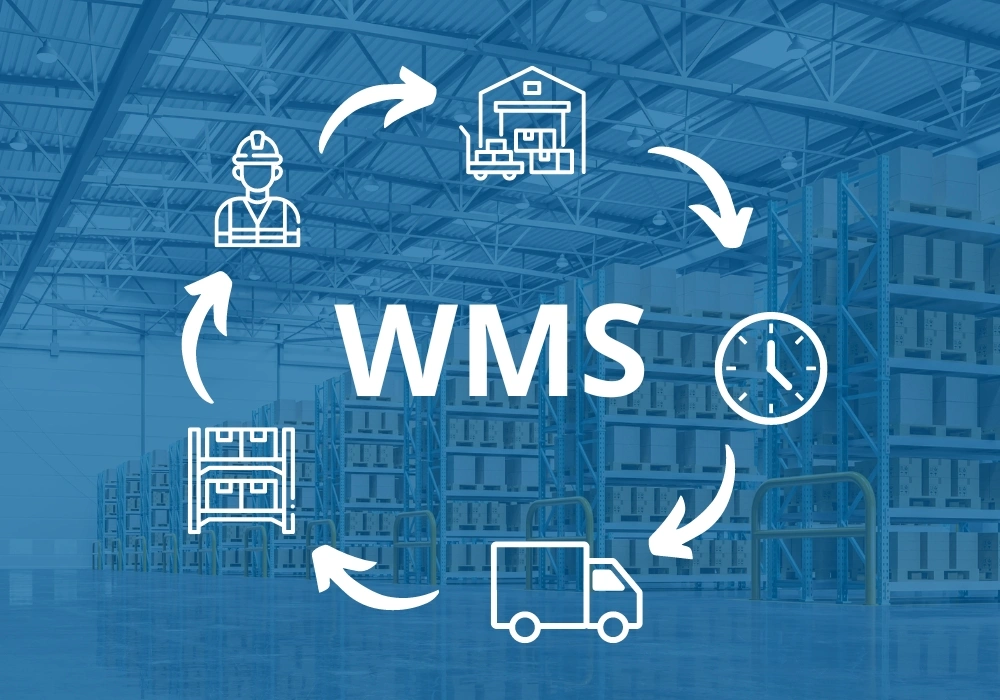
Understanding how a WMS works requires looking at the flow of operations. When inventory arrives, it is scanned and recorded into the system through the inbound process, assigning it to specific storage locations. As orders are placed, the system generates optimized picking instructions based on warehouse layout and stock availability. Items are picked, verified through scanning, and prepared for shipment. Throughout this process, the system updates inventory levels in real time, ensuring full visibility and accuracy. Managers can monitor operations through dashboards, identify bottlenecks, and make data-driven decisions to improve efficiency.
At Edge of Content, a Bali-based software development, cybersecurity, SEO, and digital growth agency, we design and develop custom warehouse management systems tailored to each business’s operational requirements. Our solutions include scalable backend architectures, secure APIs, and user-friendly interfaces that integrate seamlessly with ERP systems, logistics providers, and third-party tools. We also extend WMS platforms with mobile applications for warehouse staff, enabling real-time updates, task management, and improved coordination on the ground.
Security and performance are embedded into every system we build. We implement role-based access control, data encryption, and secure authentication to protect sensitive operational data. Our systems are optimized for speed and reliability, ensuring smooth performance even in high-volume environments.
For logistics and manufacturing companies, a WMS is not just a tool but a strategic system that drives efficiency, accuracy, and growth. Edge of Content delivers warehouse management solutions that transform operations into streamlined, data-driven ecosystems capable of scaling with business demands.
info@edgeofcontent.com
https://wa.me/6285692850857