


Delivery Models
Dedicated software team | Project-based development |
Extra technical support for an existing tech projects | Flexible
engagement models designed to match your timeline, budget, and growth strategy
Our teams work as an extension of your business to help you build, scale, and launch faster
Technical Director & Lead Architect
30+ years of experience | Cloud & E-commerce Architectures in Africa
Senior Project Manager & Business Analyst Specialist
8 years of experience | Functional framing, Agile, Change management
Development Team
15 Developers managed by the Technical Director
Team [1]
5 Developers
Full-Stack & Mobile
Team [2]
5 Developers
Full-Stack & Mobile
Team [3]
5 Developers
Full-Stack & Mobile
Core Team Competencies
- Scalable Cloud Architectures
- Secure E-commerce Platforms
- Agile Methodologies
- Change Management
- Technologies: Next.js, Laravel, React Native
Delivery Models
Agile pod scaling, global managed services, talent optimization, and distributed hybrid delivery governance
24/7 Production Traceability
Android Sandbox
Test native compilation outputs instantly. Firebase pipelines compile and push raw Android Studio packages straight to this link whenever our Bali team updates code arrays.
iOS Simulation
Interact with the React Native client build inside your web browser. No provisioning profiles or app store clearance required to audit mobile layout progress.
API Playground
Execute live queries straight into our Laravel backend server logic. Scramble documentation auto-updates route signatures to allow sandbox verification of database tables.
Server Metrics
Monitor live system bandwidth, RAM usage, and active background worker activity on our KVM 4 VPS via Laravel Pulse dashboard telemetry strings.
Dedicated Development Teams
Hire a dedicated team of developers, designers, QA engineers, and project managers focused entirely on your product and long-term goals
Project-Based Software Development
End-to-end software development for startups and businesses with clear timelines, milestones, feature planning, and delivery management
Staff Augmentation & Scaling
Quickly scale your existing engineering team with experienced developers, specialists, and technical experts who integrate directly into your workflow
EdgeOfContent Delivery Models
A delivery model is a framework or methodology, not a physical piece of software or technology. In the tech industry, the term “delivery model” actually has two separate meanings depending on the context. Neither is a tool like Python, but both are structural strategies similar to how an MVP is a structural business strategy
Context 1: Cloud & Software Delivery (How software is hosted)
In cloud computing, a delivery model refers to how applications and computing infrastructure are packaged and given to the client. They define who manages the hardware versus who manages the code. These are known as the “cloud computing stack”:
Software-as-a-Service (SaaS)
The user accesses a fully completed app via a web browser (e.g., Netflix, Salesforce, or Microsoft 365).
Platform-as-a-Service (PaaS)
The cloud provider hosts the hardware and operating systems so developers can just upload their raw code (e.g., Heroku or AWS Elastic Beanstalk).
Infrastructure-as-a-Service (IaaS)
The provider rents out raw digital servers, and the customer must set up the operating systems and networks themselves (e.g., AWS EC2).
Context 2: IT & Project Delivery (How software is built)
In project management, a delivery model refers to the process, team structure, and methodology used to build and ship an IT project. It answers how a team will collaborate to finish the work:
Agile / Scrum
An adaptive, iterative approach where the software is built in small, 2-week increments.
Waterfall
A rigid, sequential plan where everything is designed upfront and built all at once over many months.
Onshore / Offshore / Hybrid
A geographic delivery structure defining where the engineering team sits (e.g., local engineers working with a development team based in another country).
How do they compare to an MVP?
While an MVP is a business validation technique (proving that people want your product), a Delivery Model is an execution blueprint (defining how you build or host your product)
| Concept | What it answers | Example |
|---|---|---|
| MVP | What core features do we build to prove people will buy this? | A basic app that only has one single button to book a local cleaner |
| Project Delivery Model | How will our engineering team organize themselves to build it? | An Agile framework utilizing 4 developers working in 2-week sprints |
| Cloud Delivery Model | Where and how will users connect to the code once it’s built? | Deploying the finished product as a SaaS web app hosted on the internet |
Modern Software Delivery & Infrastructure Models
Understanding your deployment landscape. Evaluate modern hosting, scaling, and distribution strategies to match data privacy, control, and engineering overhead requirements.
Beyond Traditional SaaS
Core platform options that offer flexible combinations of backend infrastructure ownership and developer environment setup.
- IaaS: Raw computing power, virtual networking, and storage space. You manage the OS, apps, and databases. (e.g., Amazon EC2, Google Compute Engine)
- PaaS: A pre-configured ecosystem built specifically for running code. The host handles underlying server and OS patches. (e.g., Heroku, AWS Elastic Beanstalk)
Isolated & Secure Environments
Tailored for regulatory compliance, maximum performance, complete physical data ownership, and hybrid networks.
- On-Premises (Self-Hosted): Systems run directly on internal hardware in your server room. Vital for banks, hospitals, and government security.
- Private Cloud / VPC: Isolated cloud infrastructure dedicated solely to your enterprise. Prevents any multi-tenant data bleed risks.
- Hybrid Cloud: Combines public PaaS platforms for user applications with high-security on-premises databases for secure file records.
Modern Distributed Infrastructure
Decentralized execution frameworks focused on removing maintenance tasks and optimizing raw latency speeds.
- Serverless / FaaS: Isolated code blocks run on demand triggered by events, removing continuous idle server running costs. (e.g., AWS Lambda, Cloudflare Workers)
- Edge Computing: Code executes on network edge nodes directly beside the end-user. Drastically reduces geographical data latency.
The Construction & Ownership Analogy
IaaS is like leasing an empty plot of land with plumbing—you have to design and build the entire structure yourself. PaaS is like renting a fully serviced developer workshop; you focus completely on your crafted products without tracking utility lines. On-Premises is buying a private fortress where you manage everything from physical security guards to generator fuel, while Serverless is like hiring an on-demand courier who only operates when explicitly summoned by a service call.
Ready to Deploy Your Own Custom Architecture?
Whether you need an optimized serverless pipeline, an enterprise hybrid cloud configuration, or a scalable global platform, our engineering team can build it.
SaaS vs. PaaS Delivery Models
Understanding your role in the cloud ecosystem. Choose between ready-to-use software applications or customizable environments built to scale your code
The Developer Environment
PaaS delivers hardware and software tools over the internet, giving engineering teams a unified environment to build, deploy, and manage custom applications
- Complete control over custom application source code
- Internal management of data, analytics, and scaling logic
- Infrastructure, servers, OS, and networking handled by host
- Utilizes modern engines like Heroku, Firebase, and AWS Beanstalk
The End-User Product
SaaS delivers a complete, cloud-hosted software application directly through your device browser, entirely managed and updated by the vendor
- Ready-to-use business software out of the box
- Zero configuration required for server updates or maintenance
- Accessible cross-platform on web, desktop, and mobile screens
- Powered by applications like Slack, HubSpot, and Microsoft 365
The Shared Infrastructure Analogy
Think of PaaS like renting a state-of-the-art developer workshop—the utilities, heavy tools, and framework infrastructure are ready, but you must program and build the actual product yourself. SaaS is like hailing a premium corporate taxi—you instantly pay a recurring subscription to ride from point A to point B, without needing to know how the server architecture or maintenance engine runs behind the dashboard
Ready to Deploy Your Own Custom Architecture?
Whether you need an optimized PaaS pipeline for your engineering workforce or a scalable end-user SaaS product to build recurring revenue, our engineering team can build it
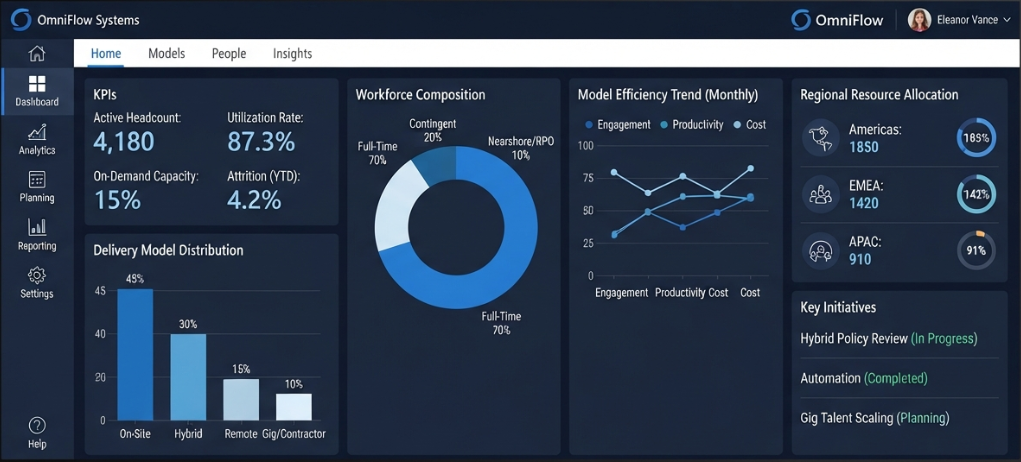
Our Transition & Implementation Lifecycle
How we seamlessly integrate with your existing codebases, cloud platforms, and internal developer teams without causing operational downtime
Architecture Audit & Discovery
We analyze your current application state, infrastructure map, dependencies, and delivery blockages to map out your targeted deployment path
- Deep mapping of systemic tech debt and performance bottlenecks
- Comprehensive data vulnerability and cloud isolation validation
Environment Pipeline Staging
Our DevOps engineers configure clean container pipelines, sandboxed developer registries, and continuous staging environments before touching live code
- Isolated deployment environments utilizing automated staging protocols
- Automated CI/CD regressions engineered into system triggers
Data Migration & Sync
We systematically transfer production assets, databases, and structural schema layers over to your modern cloud destinations with active traffic mirroring
- Zero-downtime database migration utilizing active cluster routing
- Real-time parity validation via automated validation ledgers
Velocity Optimization
Our assigned developers plug directly into your daily sprint workflows, setting up system health notifications, monitoring charts, and feedback loops
- Integration into internal Slack, Teams, and Jira tracking hubs
- Ongoing velocity analysis to continuously clear development blocks
Ready to Transition Your Systems Without Risk?
Schedule a call with our cloud deployment specialists to design your infrastructure setup, transition strategy, and timeline estimation layout
Legal Compliance & Security Guardrails
How we safeguard your corporate digital assets, isolate architectural liabilities, and protect international code ownership boundaries
100% IP Ownership Guardrails
Every single line of production code, architectural schema, software asset, and documentation compiled by our engineering workforce belongs entirely to your business from sprint day one
- Strict enterprise-grade non-disclosure agreement (NDA) compliance protocols
- Isolated target Git registries with private developer access validation
Global Regulatory Alignment
We enforce absolute compliance guidelines across our distributed hybrid delivery governance to ensure your codebases match stringent international regulatory rules
- Full systemic readiness profiles for GDPR, HIPAA, and custom local regulations
- Continuous secure static checks running inside all delivery pipelines
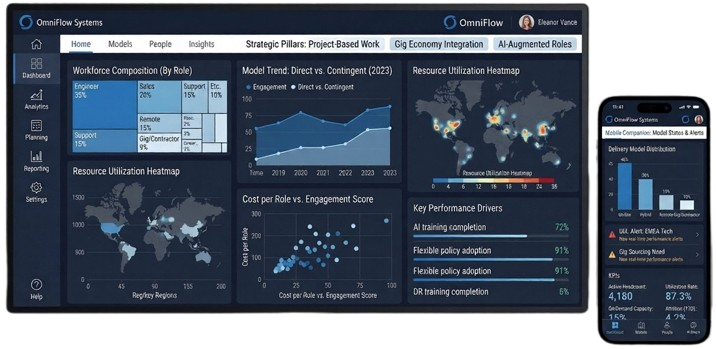
Build High-Performing Remote Teams Without the Hiring Overhead
Scale your business with experienced remote developers, designers, QA engineers, and technical specialists who integrate directly into your workflow. We help companies build reliable remote teams that move fast, communicate clearly, and deliver consistently.
Remote Teams That Work Like In-House Employees
Our remote specialists integrate directly into your tools, meetings, workflows, and communication channels to ensure smooth collaboration and full project visibility.
Global Talent Access
Hire skilled remote professionals across frontend, backend, mobile, DevOps, UI/UX, QA, and cloud engineering.
Fast Team Scaling
Expand your engineering capacity quickly without long hiring cycles or internal recruitment delays.
Dedicated Developers
Hire full-time remote developers dedicated to your project, roadmap, and long-term product goals.
Specialized Experts
Add senior engineers, DevOps specialists, architects, and consultants whenever your project requires extra expertise.
Managed Remote Teams
We manage remote teams, workflows, quality assurance, and delivery processes so your internal team can stay focused on growth.
Long-Term Team Expansion
Easily scale your remote workforce up or down based on project needs, timelines, and business growth.
Demystifying The Core API
OpenAPI Spec
The official blueprint. It is the language-agnostic master plan detailed in JSON or YAML that explicitly rules how endpoints, params, and backend structures look before code is written.
Swagger UI
The interactive visual playground. It translates ugly code structures into clean, browser-based buttons. You can test live database entry pipelines straight from your web viewport.
Swagger Editor
The structural drafting cockpit. A smart browser editor where our engineering team explicitly maps out, writes, and realigns system route properties without breaking things.
Swagger Codegen
The automated code factory. It scans our verified OpenAPI map parameters and instantly prints out ready-to-use client SDK connection pipelines in alternative languages.
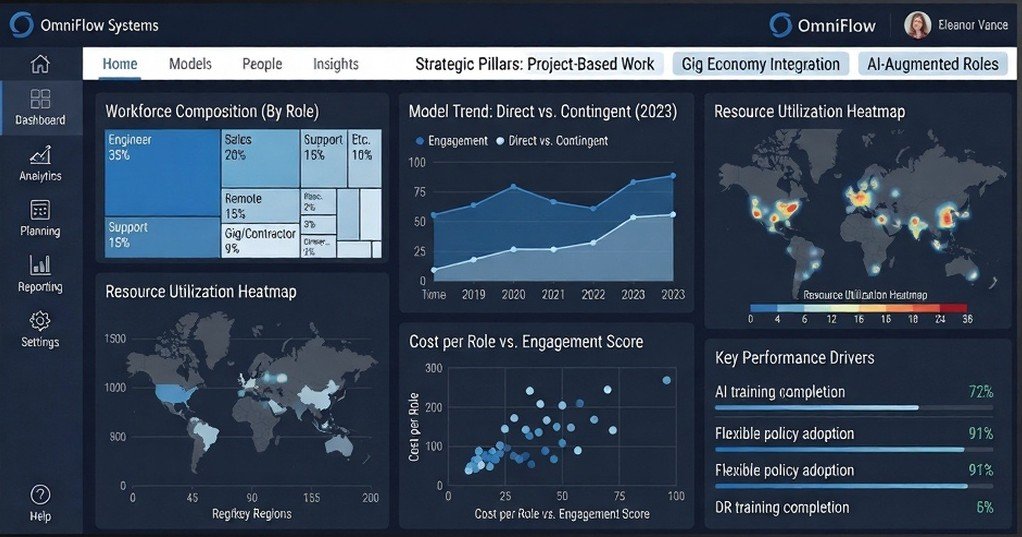
Adaptable Delivery Models for Scaling Remote Teams
Optimize your business structure with tailored delivery models designed to deploy elite remote development teams that match your exact engineering workflow and operational goals.
Dedicated Staffing
Leverage long-term workforce & delivery models to hire dedicated frontend, backend, and cloud engineers focused entirely on building your core product.
Flexible Scaling
Utilize agile workforce & delivery models to rapidly scale your remote engineering capacity up or down based on your active development sprints.
Direct Collaboration
Integrate custom workforce & delivery models where remote professionals plug directly into your internal tools, communications, and daily meetings.
Faster Product Delivery With Agile Development Teams
We use agile development workflows to help businesses launch faster, adapt quickly, and continuously improve products through short development cycles, transparent collaboration, and ongoing feedback.
Sprint Planning
Organize priorities, features, and development goals into structured sprint cycles.
Continuous Delivery
Release improvements and new features consistently with faster iteration cycles.
Transparent Collaboration
Stay involved through regular updates, sprint reviews, and shared project visibility.

Build Your Next Digital Platform
From websites and software systems to branding and digital growth solutions, EdgeOfContent develops modern digital experiences engineered for scalability, performance, and long-term success
Flexible Collaboration Options
Scale your operational infrastructure with adaptable, high-output alignment models engineered to fit your technical ecosystem and timeline parameters.
Dedicated Development Squads
Fully managed, cross-functional engineering teams completely aligned with your product roadmap, core culture, and engineering workflows.
- Turnkey end-to-end product delivery
- Scrum masters & QA experts included
- Rigid milestone & velocity tracking
Staff Augmentation Frameworks
Inject specialized elite technical talent into your existing internal teams to eliminate talent gaps, accelerate sprint velocities, and hit critical deadlines.
- Rapid pipeline team scaling
- Direct management control
- Vetted, tier-1 technical expertise
Strategic Venture Co-Development
Deep-tier collaboration framework designed for enterprise scale innovation, IP generation, and technical equity alignment on next-gen tech builds.
- Risk-sharing partnership protocols
- Joint intellectual property frameworks
- Global target market architecture
Expertise-First. Clients don’t hire corporate entities; they hire the brains behind the production code. We are real-world problem-solvers, not talkers with paper credentials.
Frequently Asked Questions About Our Workforce & Delivery Models
Learn how our remote teams, dedicated developers, and agile development processes help businesses scale faster and deliver projects efficiently.
What is a dedicated development team?
A dedicated development team is a group of developers, designers, QA engineers, and technical specialists focused entirely on your project. They work as an extension of your business and integrate into your workflow.
How do remote development teams work?
Remote teams collaborate through tools like Slack, Jira, GitHub, Zoom, and project management platforms while maintaining regular communication, sprint planning, and progress updates.
Can we scale the team as the project grows?
Yes. You can quickly scale your team up or down depending on project requirements, deadlines, feature expansion, or long-term business growth.
What industries do you support?
We work with startups, SaaS companies, healthcare providers, fintech businesses, logistics companies, eCommerce brands, hospitality businesses, and enterprise organizations.
What is agile development?
Agile development is a flexible software development process that focuses on short sprint cycles, continuous improvements, faster releases, and ongoing collaboration between teams and clients.
Do you provide project managers and QA engineers?
Yes. Depending on your project needs, we can provide project managers, scrum masters, QA engineers, DevOps specialists, UI/UX designers, and senior technical consultants.
How quickly can a remote team start?
Project timelines vary depending on team size and requirements, but most remote development teams can begin onboarding within days.
Do dedicated teams work in our timezone?
Yes. We build remote teams that align with your preferred timezone, communication schedule, and operational workflow.
Need Help Choosing the Right Delivery Model?
Talk with our team about remote staffing, dedicated developers, agile workflows, and scalable software delivery solutions.