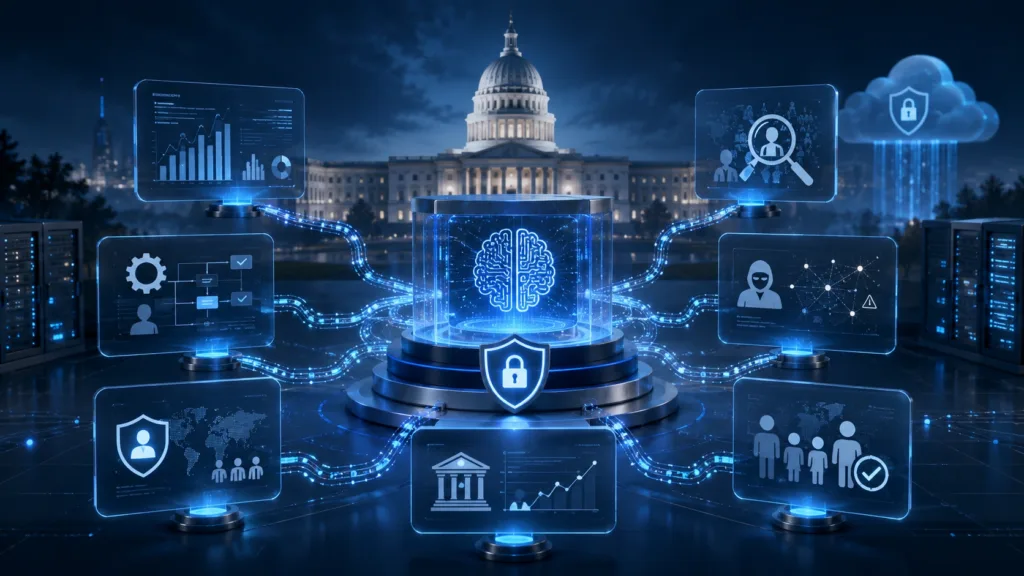
African Cybersecurity

What Are AI Models for Government 1024x576 1

Why All Countries Need Their Own AI Infrastructure

Why All Countries Need Their Own AI Infrastructure National AI infrastructure is becoming a strategic necessity for governments seeking digital sovereignty, economic competitiveness, cybersecurity resilience, and independent control over critical intelligence systems and public-sector technologies. Artificial intelligence, digital governance platforms, procurement analytics, automated auditing, and transparency systems are transforming how governments detect risks, strengthen accountability, […]

Why All Countries Need Their Own AI Infrastructure Read More »

Defense and intelligence 2 Partners 416x178 1

Why Africa’s Future Depends on Technological Self-Reliance

Why Africa’s Future Depends on Technological Self-Reliance Africa’s long-term economic strength, national security, and innovation capacity increasingly depend on the ability to build, own, and control core digital infrastructure, data systems, and advanced technologies internally rather than relying on external dependencies. Artificial intelligence, digital governance platforms, procurement analytics, automated auditing, and transparency systems are transforming

Why Africa’s Future Depends on Technological Self-Reliance Read More »

Secure Intelligence Ecosystems

How African Governments Can Build Secure Intelligence Ecosystems

How African Governments Can Build Secure Intelligence Ecosystems African governments are entering an era where intelligence capabilities increasingly depend on secure digital infrastructure, AI-powered monitoring systems, sovereign data ecosystems, and integrated cybersecurity operations capable of supporting modern national security environments. Artificial intelligence, digital governance platforms, procurement analytics, automated auditing, and transparency systems are transforming how

How African Governments Can Build Secure Intelligence Ecosystems Read More »

insider threat cybersecurity e1779136465516

How Governments Can Detect Internal Security Threats Using Technology

How Governments Can Detect Internal Security Threats Using Technology Modern security threats do not always originate from external attackers. Governments increasingly face internal risks involving unauthorized access, insider abuse, credential compromise, operational negligence, data leakage, infrastructure manipulation, policy violations, and covert intelligence activity occurring within institutional environments themselves. Artificial intelligence, digital governance platforms, procurement analytics,

How Governments Can Detect Internal Security Threats Using Technology Read More »

Secure Government Communication Networks

The Importance of Secure Government Communication Networks

The Importance of Secure Government Communication Networks Government communication systems are among the most critical components of national infrastructure. Military coordination, emergency response, intelligence operations, diplomatic activity, financial governance, border security, law enforcement, and public administration all depend heavily on secure and reliable communication environments. Artificial intelligence, digital governance platforms, procurement analytics, automated auditing, and

The Importance of Secure Government Communication Networks Read More »

Cybersecurity Africa Website1 1024x553 1

Why Africa Needs Indigenous Cybersecurity Companies

Why Africa Needs Indigenous Cybersecurity Companies Africa’s digital transformation is accelerating rapidly across banking, telecommunications, healthcare, energy systems, cloud infrastructure, e-governance, education, logistics, and financial technology ecosystems. As institutions become increasingly connected, cybersecurity is no longer only a technical issue. It has become a strategic issue directly tied to national resilience, economic stability, operational sovereignty,

Why Africa Needs Indigenous Cybersecurity Companies Read More »

bolg2 min e1779134825226

How Foreign Intelligence Agents Exploit Weak Institutional Infrastructure

How Foreign Intelligence Agents Exploit Weak Institutional Infrastructure Modern intelligence operations rarely depend only on espionage movies, physical infiltration, or covert field activity. In today’s digital environment, foreign intelligence actors increasingly exploit weak institutional infrastructure, fragmented digital systems, poor cybersecurity governance, operational blind spots, and weak communication security to gather intelligence, influence operations, and compromise

How Foreign Intelligence Agents Exploit Weak Institutional Infrastructure Read More »

Fires BiH

Building National Emergency Coordination Platforms

Building National Emergency Coordination Platforms Modern emergencies evolve faster than traditional coordination systems can respond. Natural disasters, cyber attacks, infrastructure failures, pandemics, border incidents, power outages, telecommunications disruption, and large-scale public safety threats now require governments to operate through highly connected, real-time coordination environments capable of supporting rapid national response. Many emergency response systems still

Building National Emergency Coordination Platforms Read More »

AFRICA AI

Building Secure Inter-Ministerial Data Sharing Platforms

Building Secure Inter-Ministerial Data Sharing Platforms Modern governments depend heavily on data coordination across ministries, agencies, security operations, healthcare systems, border control, financial institutions, telecommunications infrastructure, and public administration platforms. Without secure inter-ministerial data sharing, governments often struggle with fragmented operations, delayed decision-making, duplicated systems, and limited national visibility. Ministries frequently operate through isolated infrastructure

Building Secure Inter-Ministerial Data Sharing Platforms Read More »

816378 5d590f6ff6704b579f6f1f0bad4d02f1mv2

Why African Governments Need Unified Intelligence Dashboards

Why African Governments Need Unified Intelligence Dashboards Modern governments operate across highly interconnected digital, operational, and geopolitical environments. Border security, cyber threats, public safety, financial monitoring, telecommunications activity, infrastructure protection, and emergency coordination now generate enormous volumes of fragmented data every second. Without centralized intelligence visibility, critical threats can remain hidden across disconnected systems. Many

Why African Governments Need Unified Intelligence Dashboards Read More »

Scroll to Top