Cybersecurity

Cybersecurity Africa Website1 1536x829 2

The Future of African Cyber Defense Systems

The Future of African Cyber Defense Systems Africa’s next generation of national security will not be defined only by military expansion or physical infrastructure. It will be defined by how effectively nations secure digital systems, protect critical infrastructure, and establish sovereign control over cyber operations. Across the continent, governments, financial institutions, telecommunications providers, and public […]

The Future of African Cyber Defense Systems Read More »

images 3

Why National Security Starts With Software Infrastructure

Why National Security Starts With Software Infrastructure Modern nations are no longer secured only by borders, military assets, or physical surveillance. National stability now depends on the integrity, control, and resilience of the software systems operating beneath government, finance, communications, energy, and public infrastructure. Every modern institution runs on software infrastructure. Banking systems, telecommunications, transportation

Why National Security Starts With Software Infrastructure Read More »

ezgif.com webp maker 13

Why VPNs, Firewalls, and Tor Still Fail to Stop Modern Cyber Threats

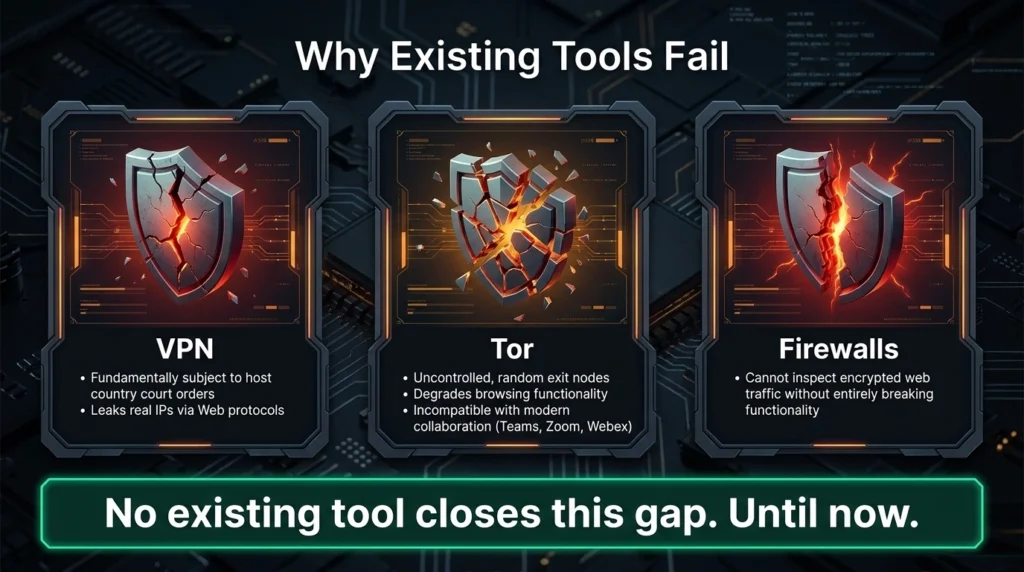
Why VPNs, Firewalls, and Tor Still Fail to Stop Modern Cyber Threats Security tools fail when organizations mistake isolated protection layers for complete security architecture. Modern cyber threats exploit behavioral gaps, application logic, human trust, and operational complexity far beyond network-level defenses. VPNs, firewalls, and anonymity networks were designed to solve specific security problems. A

Why VPNs, Firewalls, and Tor Still Fail to Stop Modern Cyber Threats Read More »

ezgif.com webp maker 12

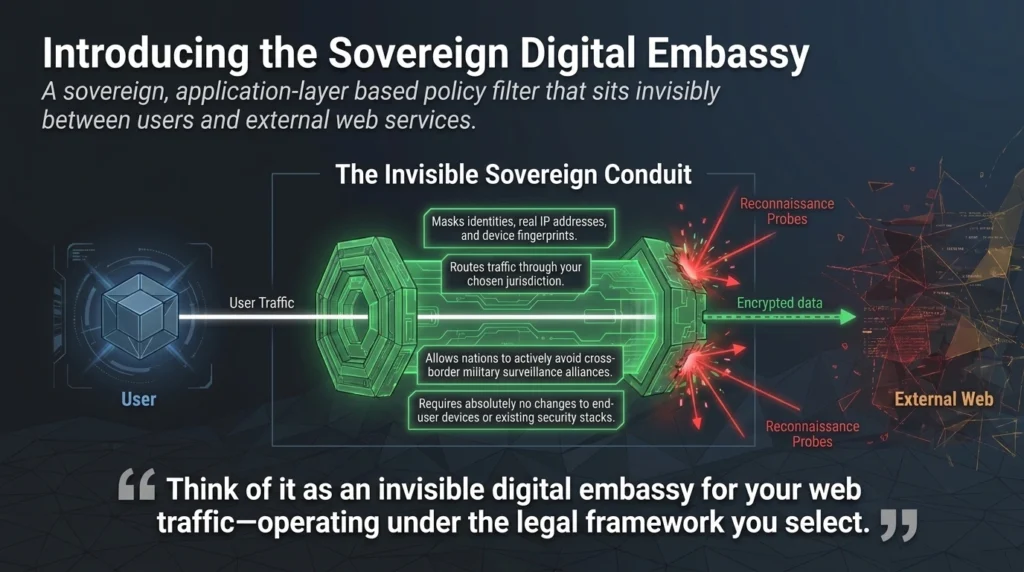
Sovereign Application Layer Policy Filtering for National Digital Control

Sovereign Application Layer Policy Filtering for National Digital Control Modern digital sovereignty is no longer achieved solely through infrastructure ownership. True control now exists at the application layer — where requests, data flows, user behavior, and external platform interactions are continuously governed in real time. A sovereign application-layer policy filter functions as an invisible enforcement

Sovereign Application Layer Policy Filtering for National Digital Control Read More »

3676d230 e842 4c07 89ef

How African Nations Can Modernize Intelligence Operations With Technology

How African Nations Can Modernize Intelligence Operations With Technology Intelligence modernization is no longer a luxury upgrade. It is a structural shift from fragmented legacy systems to unified, AI-driven national security ecosystems built for speed, accuracy, and resilience. 1. Unified National Intelligence Data Infrastructure Modern intelligence operations begin with consolidation. Data from border control, law

How African Nations Can Modernize Intelligence Operations With Technology Read More »

ezgif.com webp maker 11

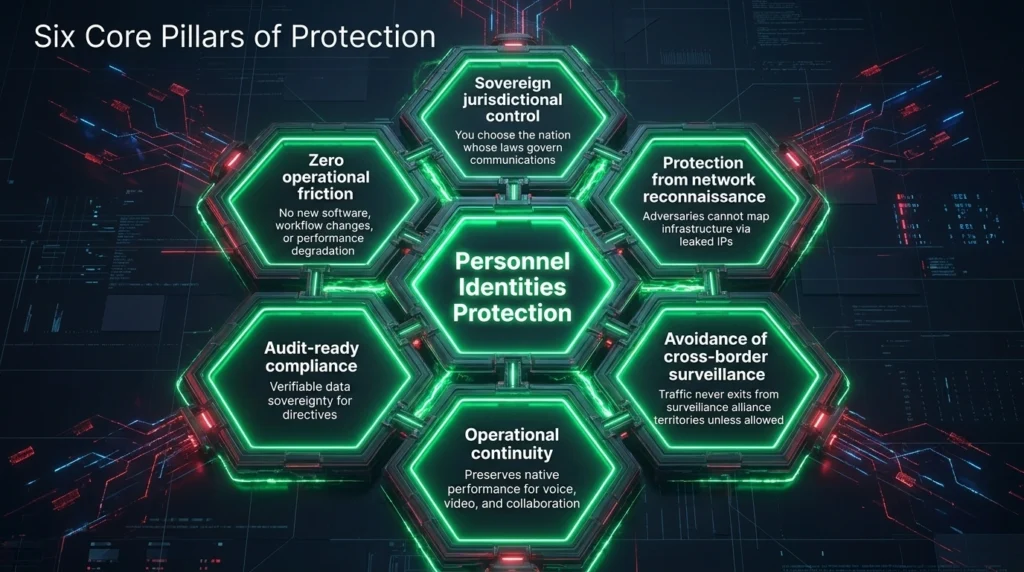
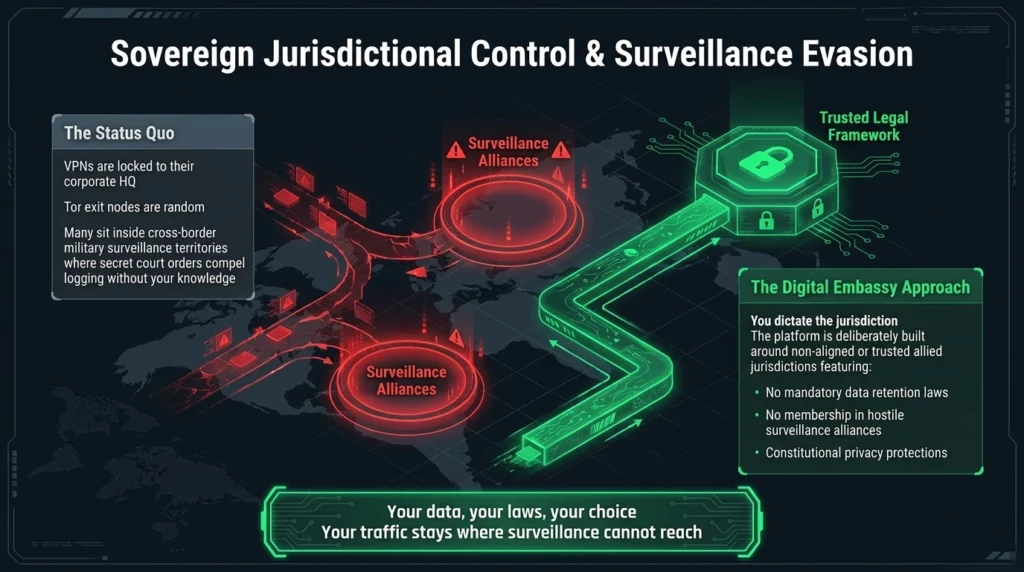
Six Core Pillars of Sovereign Digital Protection

Six Core Pillars of Sovereign Digital Protection A national-grade security architecture is not built on tools. It is built on structural control, continuity, and elimination of external dependency across all digital layers. 1. Sovereign Jurisdictional Control National systems must operate strictly under domestic legal and infrastructural authority. This ensures full control over communications, data residency,

Six Core Pillars of Sovereign Digital Protection Read More »

ezgif.com webp maker 10

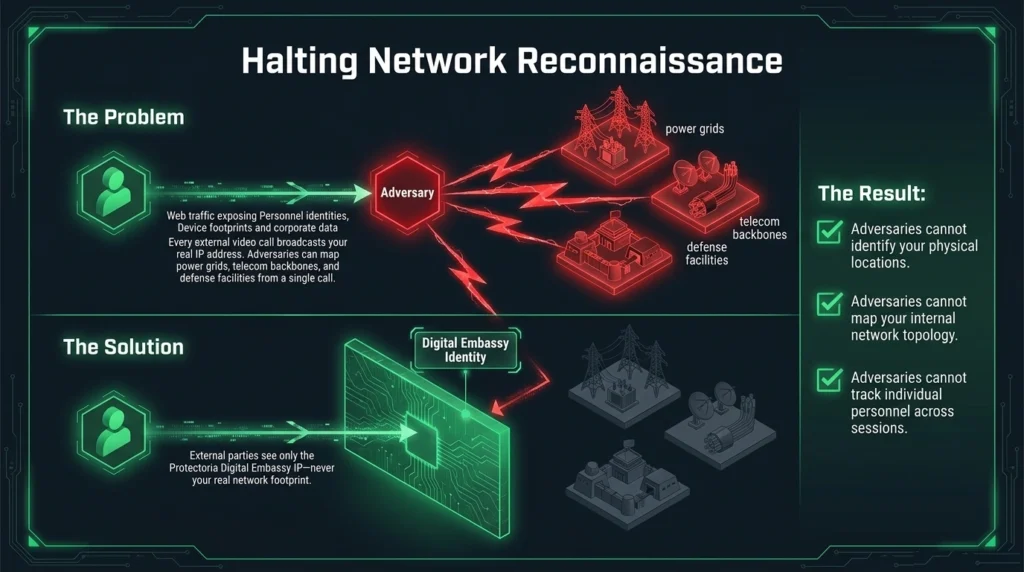
Halting Network Reconnaissance in Critical Government Infrastructure

Halting Network Reconnaissance in Critical Government Infrastructure Preventing early-stage network mapping is one of the most effective ways to reduce exposure of government systems to coordinated cyber threats. Network reconnaissance is the initial phase of most cyber intrusions. It involves mapping infrastructure, identifying exposed services, and profiling system behavior before exploitation attempts begin. In government

Halting Network Reconnaissance in Critical Government Infrastructure Read More »

the operational reality of identity data leakages

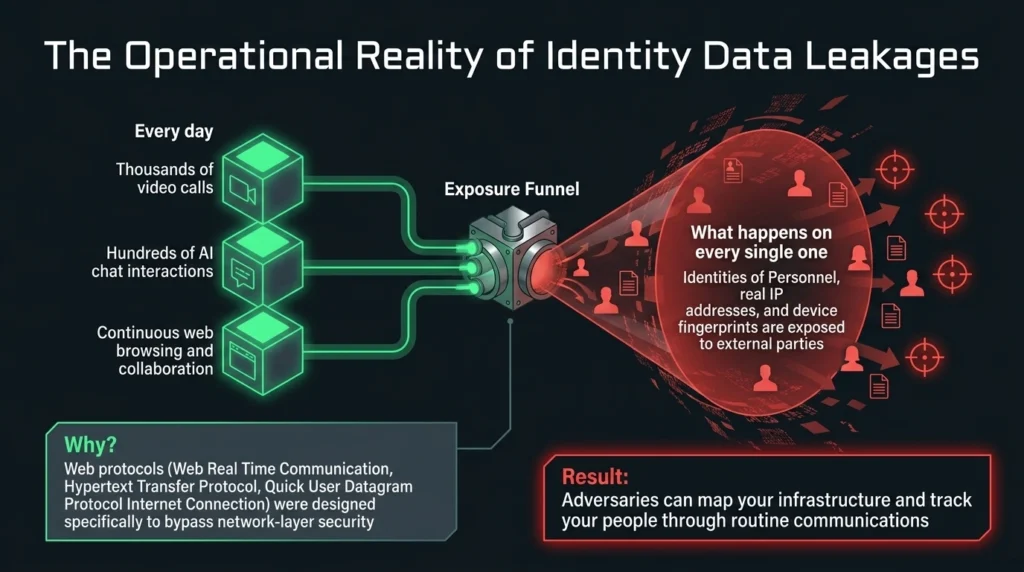
The Operational Reality of Identity Data Leakages

The Operational Reality of Identity Data Leakages Identity data leaks are not abstract cyber risks. They are recurring operational failures caused by disconnected government networks, loose internal permissions, and unmonitored vendor systems. National identity systems now sit at the center of government operations, powering passports, visas, taxation, healthcare, and border control. When these core systems

The Operational Reality of Identity Data Leakages Read More »

iStock 1870825821

Building & Securing Embassy and Consulate Visa & Passport Processing Systems with Secure Tunneling to Headquarters

Building & Securing Embassy and Consulate Visa & Passport Processing Systems with Secure Tunneling to Headquarters Modern diplomatic operations depend on secure, real-time, and centrally governed visa and passport systems connected to headquarters through encrypted infrastructure. Embassy and consulate systems are no longer isolated administrative tools. They are extensions of national identity, border control, and

Building & Securing Embassy and Consulate Visa & Passport Processing Systems with Secure Tunneling to Headquarters Read More »

Scroll to Top