government IT systems

National Elections Digital Infrastructure

Building Digital Infrastructure for National Elections

Building Digital Infrastructure for National Elections Modern elections are no longer just logistical events — they are large-scale digital operations involving voter registration systems, biometric identity verification, result transmission networks, cybersecurity defenses, and real-time public communication systems. The integrity of national elections increasingly depends on the strength of their underlying digital infrastructure. Artificial intelligence, digital […]

Building Digital Infrastructure for National Elections Read More »
ezgif.com webp maker 11

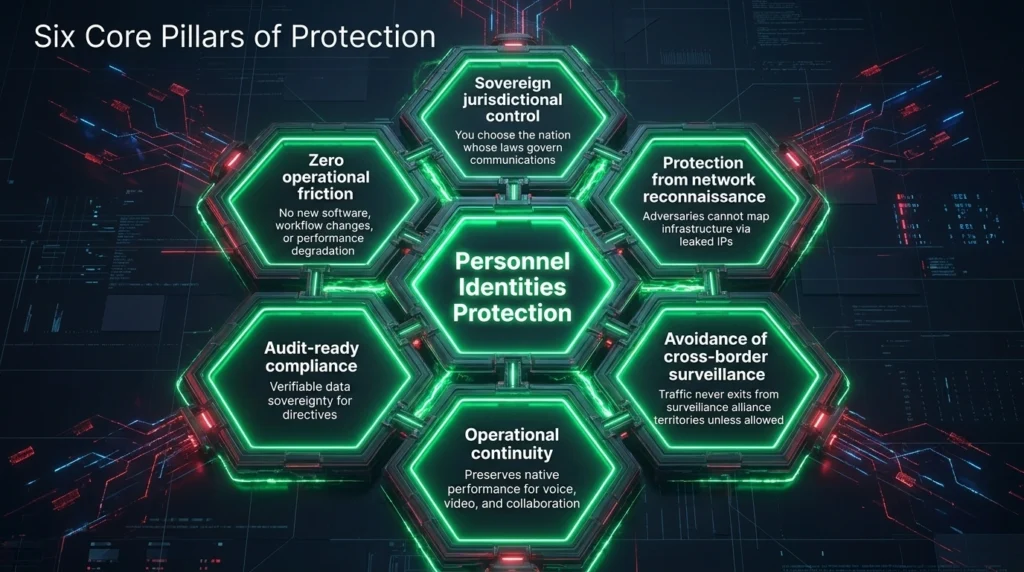
Six Core Pillars of Sovereign Digital Protection

Six Core Pillars of Sovereign Digital Protection A national-grade security architecture is not built on tools. It is built on structural control, continuity, and elimination of external dependency across all digital layers. 1. Sovereign Jurisdictional Control National systems must operate strictly under domestic legal and infrastructural authority. This ensures full control over communications, data residency,

Six Core Pillars of Sovereign Digital Protection Read More »

section 08

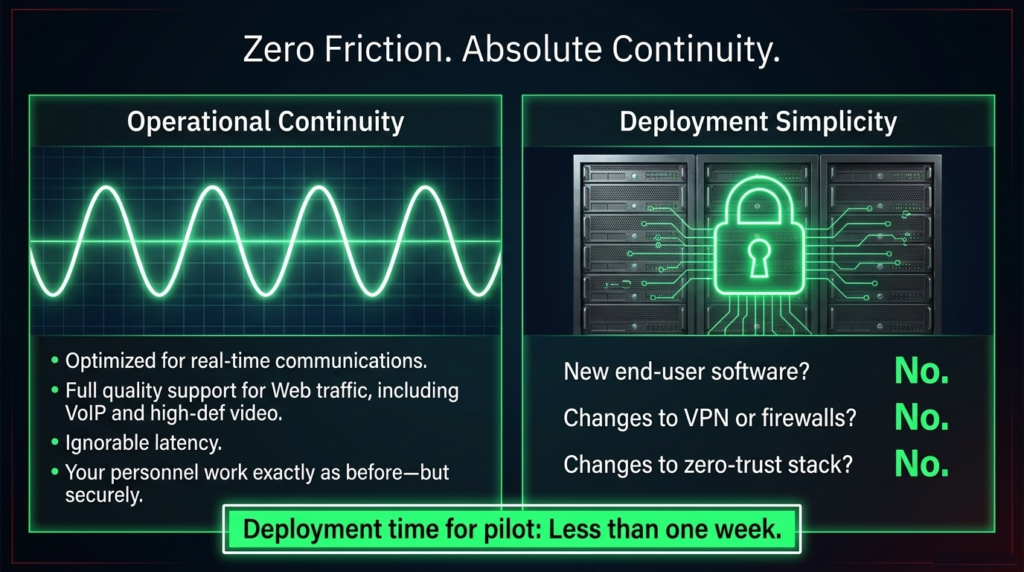
Zero Friction. Absolute Continuity in Government Digital Infrastructure

Zero Friction. Absolute Continuity in Government Digital Infrastructure National systems fail quietly when data flow, authentication, and service delivery are interrupted across ministries, borders, and legacy platforms. Government infrastructure is often designed as disconnected systems stitched together over time. Each integration adds delay, failure points, and operational overhead. Zero friction architecture removes unnecessary barriers between

Zero Friction. Absolute Continuity in Government Digital Infrastructure Read More »

iStock 1870825821

Building & Securing Embassy and Consulate Visa & Passport Processing Systems with Secure Tunneling to Headquarters

Building & Securing Embassy and Consulate Visa & Passport Processing Systems with Secure Tunneling to Headquarters Modern diplomatic operations depend on secure, real-time, and centrally governed visa and passport systems connected to headquarters through encrypted infrastructure. Embassy and consulate systems are no longer isolated administrative tools. They are extensions of national identity, border control, and

Building & Securing Embassy and Consulate Visa & Passport Processing Systems with Secure Tunneling to Headquarters Read More »

3 429 g

Why African Governments Need Sovereign Cybersecurity Systems

Why African Governments Need Sovereign Cybersecurity Systems A nation that does not control its cybersecurity infrastructure does not fully control its digital future. Across Africa, governments are rapidly digitizing public infrastructure. Ministries are becoming cloud-based. National databases are expanding. Immigration systems are modernizing. Public services are moving online. Financial systems are becoming interconnected through APIs

Why African Governments Need Sovereign Cybersecurity Systems Read More »

The 10 Most Powerful Intelligence Agencies in the World — And Why Cybersecurity Now Defines Global Power

The 10 Most Powerful Intelligence Agencies in the World — And Why Cybersecurity Now Defines Global Power Modern intelligence operations no longer depend only on spies. They depend on infrastructure, cybersecurity, data, and information technology. The global balance of power has changed dramatically in the digital era. Intelligence agencies are no longer operating only through

The 10 Most Powerful Intelligence Agencies in the World — And Why Cybersecurity Now Defines Global Power Read More »

B3 May 1 c0 431 1800 1480 s885x516 e1779113204205

How Foreign Intelligence Networks Exploit Weak African Digital Infrastructure

How Foreign Intelligence Networks Exploit Weak African Digital Infrastructure Weak digital infrastructure is no longer just a technical issue — it is a national security threat. Across Africa, governments are digitizing faster than ever. Ministries are moving online. National databases are expanding. Public services are becoming cloud-based. Embassies are interconnected through VPNs and international infrastructure.

How Foreign Intelligence Networks Exploit Weak African Digital Infrastructure Read More »

Scroll to Top