En
En Fr
Fr العربية
 BI
BI 中文
中文 РФ
РФFrom Prototype to Scalable SaaS Platform
How startups evolve early product concepts into scalable cloud-native SaaS systems designed for long-term growth.
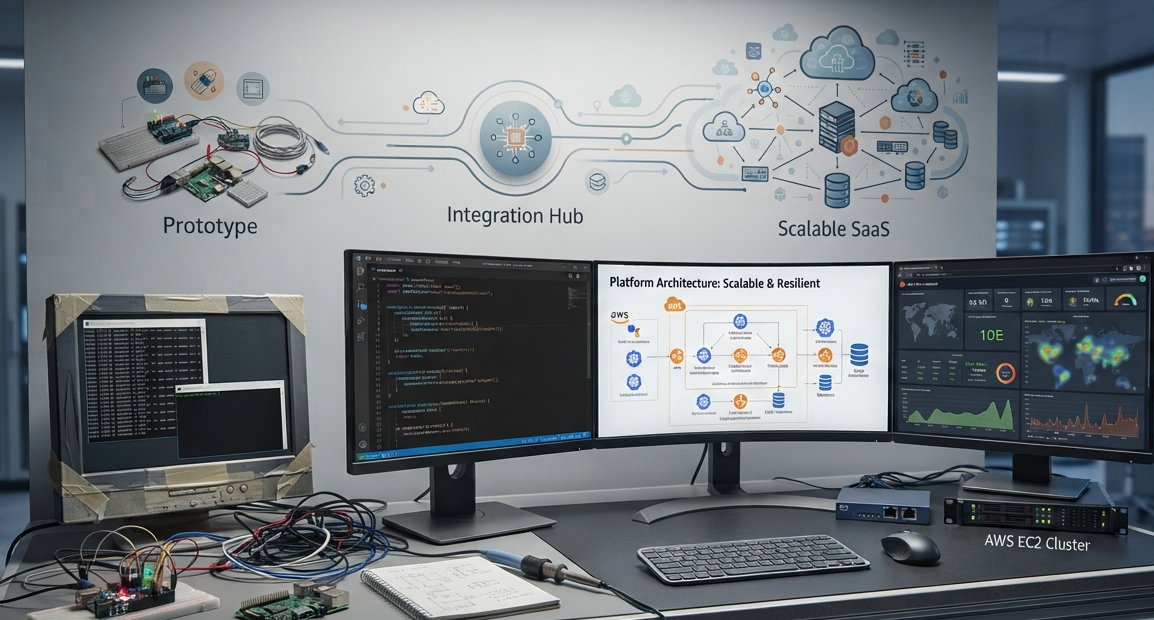
Every successful SaaS platform starts with a simple idea.
But turning a prototype into a scalable product requires far more than adding features and launching publicly.
Modern SaaS platforms must support scalability, performance, security, integrations, and operational growth from the very beginning.
What a prototype is designed for
A prototype helps founders visualize workflows, validate product concepts, and test early user interactions.
- Idea validation
- Investor presentations
- User feedback collection
- Product direction testing
- Feature prioritization
Prototypes are focused on speed and experimentation rather than infrastructure scalability.
“A prototype proves the concept. A scalable SaaS platform proves the business can grow.”
The transition from prototype to SaaS platform
Once product validation begins, startups must start building systems capable of handling growth.
- Scalable backend architecture
- Cloud-native infrastructure
- API-first systems
- Secure authentication workflows
- Reliable database architecture
- Subscription and billing systems
The goal is to transform the product from an idea demonstration into a reliable operational platform.
Why scalability matters early
Many startups delay infrastructure planning until growth creates technical problems.
This often leads to:
- Slow platform performance
- Infrastructure instability
- High operational costs
- Scalability bottlenecks
- Costly system rebuilds
Scalable SaaS architecture reduces long-term technical debt and supports faster product growth.
Core systems required for scalable SaaS products
- Multi-tenant architecture
- Cloud deployment infrastructure
- Automated CI/CD pipelines
- Monitoring and observability systems
- Role-based access management
- Performance optimization systems
These systems become essential as user activity, customer accounts, and operational complexity increase.
Why UI/UX becomes increasingly important
SaaS growth depends heavily on user adoption and retention.
- Clear onboarding flows
- Responsive dashboard systems
- Fast user interactions
- Conversion-focused design
- Operational simplicity
Strong UX improves customer trust and increases long-term product engagement.
Why startups fail during scaling
- Weak backend architecture
- Unscalable database systems
- Overcomplicated feature expansion
- Infrastructure instability
- Poor technical planning
- Lack of operational automation
Successful SaaS products scale because their systems are designed to evolve alongside the business.
How Edge of Content builds scalable SaaS products
Edge of Content helps startups evolve prototypes into scalable SaaS platforms through modern cloud architecture, API-first systems, and high-performance development workflows.
- Investor-ready MVP development
- Scalable SaaS architecture
- Cloud-native infrastructure
- Modern UI/UX engineering
- Backend scalability optimization
- High-performance software systems
Great software products are not only designed to launch.
They are engineered to scale from prototype to enterprise-grade SaaS platforms.