zero trust architecture

6953e7c3833d4e5d7f0a09be how cyber security monitoring works

What Is Cyber Security Monitoring?

What Is Cyber Security Monitoring? Cyber security monitoring is the continuous process of observing, analyzing, and responding to digital activity across systems, applications, APIs, infrastructure, and user environments to detect threats before they escalate into operational compromise. Most organizations today operate across fragmented digital environments that include cloud services, APIs, internal systems, employee devices, external […]

What Is Cyber Security Monitoring? Read More »

Cyber Threat Intelligence, Cybersecurity, Cybersecurity Architecture, Cybersecurity Infrastructure, Digital Sovereignty, Government Infrastructure, Government IT Systems, Government Systems, Government Technology, , , , , , , , , , , , ,
ezgif.com webp maker 13

Why VPNs, Firewalls, and Tor Still Fail to Stop Modern Cyber Threats

Why VPNs, Firewalls, and Tor Still Fail to Stop Modern Cyber Threats Security tools fail when organizations mistake isolated protection layers for complete security architecture. Modern cyber threats exploit behavioral gaps, application logic, human trust, and operational complexity far beyond network-level defenses. VPNs, firewalls, and anonymity networks were designed to solve specific security problems. A

Why VPNs, Firewalls, and Tor Still Fail to Stop Modern Cyber Threats Read More »

Cyber Threat Intelligence, Cybersecurity, Cybersecurity Architecture, Cybersecurity Infrastructure, Digital Defense, Enterprise Infrastructure, Featured Posts, Network Security, , , , , , , , , , , , ,
the operational reality of identity data leakages

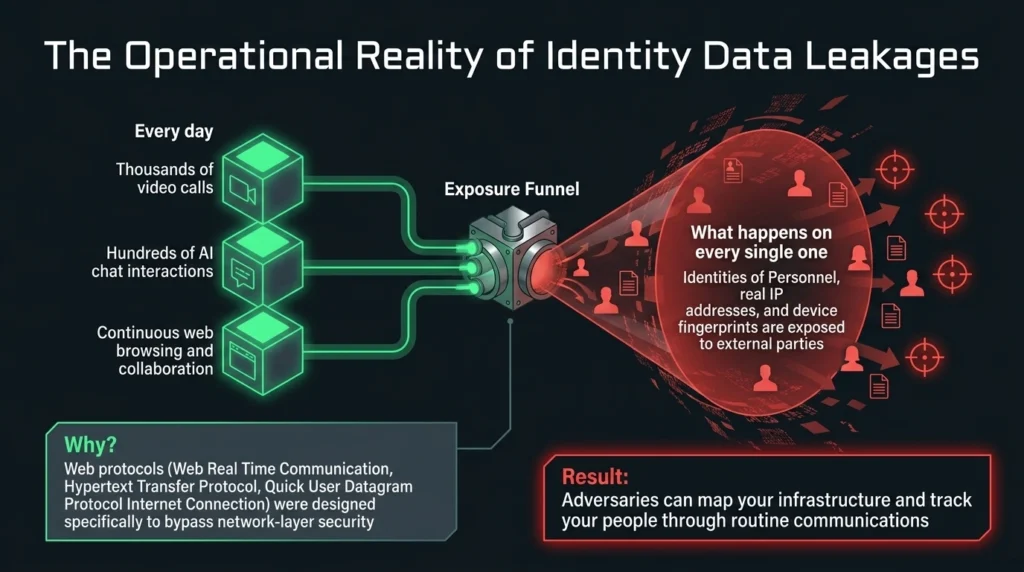
The Operational Reality of Identity Data Leakages

The Operational Reality of Identity Data Leakages Identity data leaks are not abstract cyber risks. They are recurring operational failures inside fragmented government systems, weak controls, and unmanaged vendor ecosystems. National identity systems now sit at the center of government operations, powering passports, visas, taxation, healthcare, and border control. When these systems are poorly integrated

The Operational Reality of Identity Data Leakages Read More »

Cybersecurity, Cybersecurity Architecture, Cybersecurity Infrastructure, Data Protection, Featured Posts, Government Infrastructure, Identity Systems, , , , , , , , , , , ,
3fbfccbb8db8da969592b58966c589b3

Building Secure Embassy Communication Infrastructure

Building Secure Embassy Communication Infrastructure Embassy systems are critical national infrastructure that require encrypted, resilient, and fully controlled communication networks across borders. Embassies operate in high-risk environments where communication security directly affects diplomatic integrity, citizen safety, and national intelligence operations. Weak or fragmented communication infrastructure creates exposure points that can be exploited through interception, spoofing,

Building Secure Embassy Communication Infrastructure Read More »

Cybersecurity, Cybersecurity Infrastructure, Diplomatic Infrastructure, Government IT Systems, National Security, , , , , , , , , , ,
government integration middleware solutions 1260 1

How Weak Government IT Systems Become Foreign Intelligence Entry Points

How Weak Government IT Systems Become Foreign Intelligence Entry Points Poorly secured government infrastructure creates silent access paths that can be exploited across identity, communications, and administrative systems. Government IT systems are often built under budget constraints, fragmented procurement models, and outdated architecture decisions. These weaknesses accumulate into systemic exposure. When security is treated as

How Weak Government IT Systems Become Foreign Intelligence Entry Points Read More »

Cybersecurity, Enterprise Architecture, Enterprise Software, Government IT Systems, National Security Infrastructure, , , , , , , , , , ,
Scroll to Top