Government IT Systems

6953e7c3833d4e5d7f0a09be how cyber security monitoring works

What Is Cyber Security Monitoring?

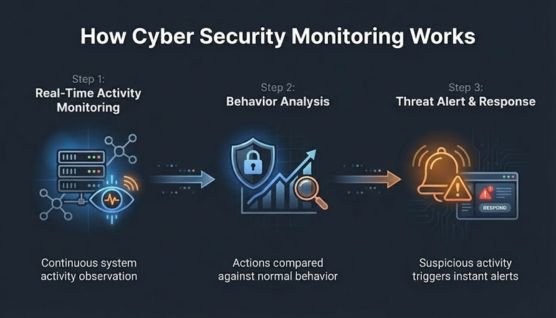
What Is Cyber Security Monitoring? Cyber security monitoring is the continuous process of observing, analyzing, and responding to digital activity across systems, applications, APIs, infrastructure, and user environments to detect threats before they escalate into operational compromise. Most organizations today operate across fragmented digital environments that include cloud services, APIs, internal systems, employee devices, external […]


What Is Cyber Security Monitoring? Read More »

images 3

Why National Security Starts With Software Infrastructure

Why National Security Starts With Software Infrastructure Modern nations are no longer secured only by borders, military assets, or physical surveillance. National stability now depends on the integrity, control, and resilience of the software systems operating beneath government, finance, communications, energy, and public infrastructure. Every modern institution runs on software infrastructure. Banking systems, telecommunications, transportation

Why National Security Starts With Software Infrastructure Read More »

ezgif.com webp maker 12

Sovereign Application Layer Policy Filtering for National Digital Control

Sovereign Application Layer Policy Filtering for National Digital Control Modern digital sovereignty is no longer achieved solely through infrastructure ownership. True control now exists at the application layer — where requests, data flows, user behavior, and external platform interactions are continuously governed in real time. A sovereign application-layer policy filter functions as an invisible enforcement

Sovereign Application Layer Policy Filtering for National Digital Control Read More »

ezgif.com webp maker 11

Six Core Pillars of Sovereign Digital Protection

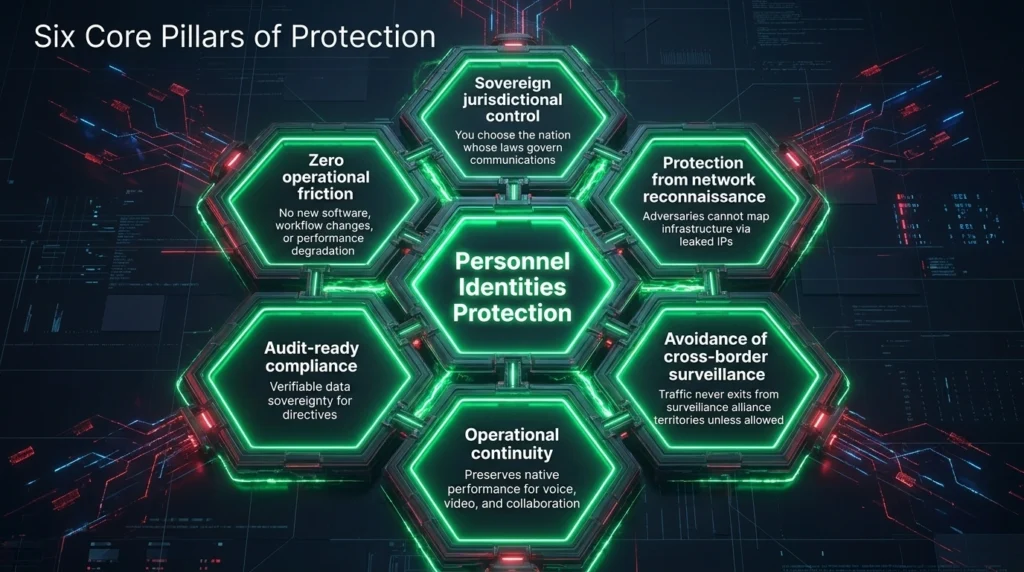
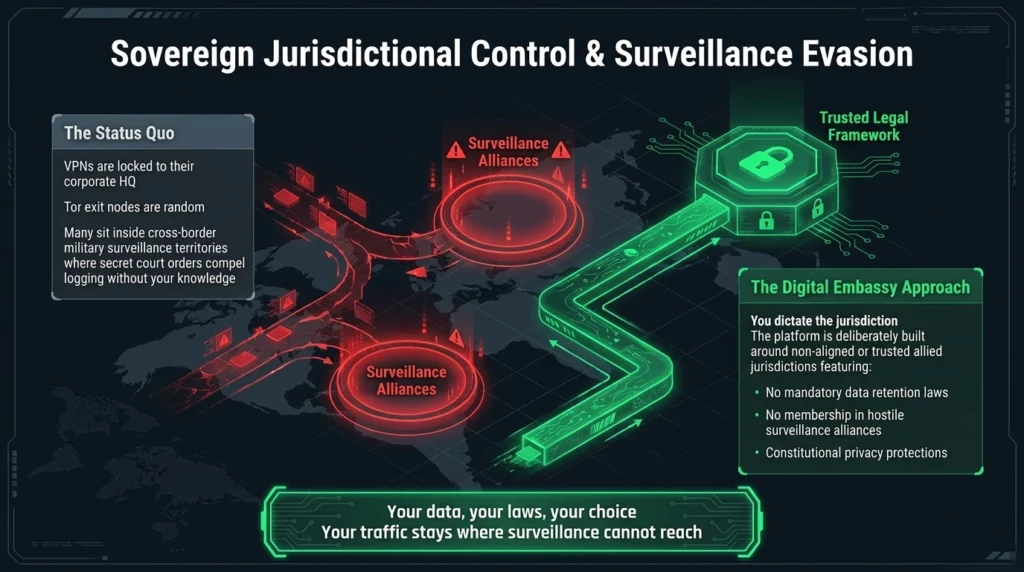
Six Core Pillars of Sovereign Digital Protection A national-grade security architecture is not built on tools. It is built on structural control, continuity, and elimination of external dependency across all digital layers. 1. Sovereign Jurisdictional Control National systems must operate strictly under domestic legal and infrastructural authority. This ensures full control over communications, data residency,

Six Core Pillars of Sovereign Digital Protection Read More »

section 08

Zero Friction. Absolute Continuity in Government Digital Infrastructure

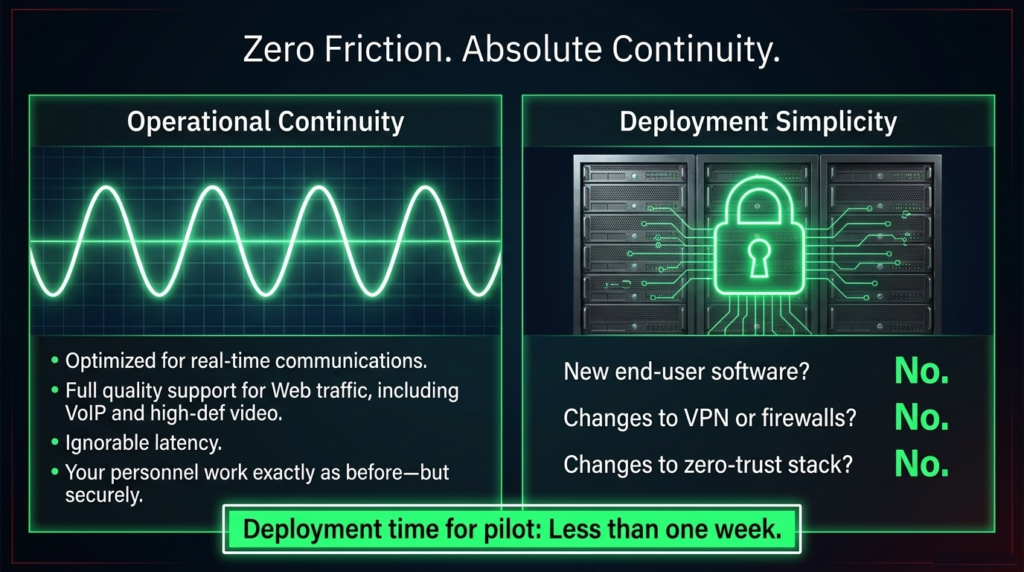
Zero Friction. Absolute Continuity in Government Digital Infrastructure National systems fail quietly when data flow, authentication, and service delivery are interrupted across ministries, borders, and legacy platforms. Government infrastructure is often designed as disconnected systems stitched together over time. Each integration adds delay, failure points, and operational overhead. Zero friction architecture removes unnecessary barriers between

Zero Friction. Absolute Continuity in Government Digital Infrastructure Read More »

Gap No One Talks About

The Gap No One Talks About in Government Digital Infrastructure

The Gap No One Talks About in Government Digital Infrastructure The most dangerous weakness in national systems is not hacking or malware. It is the silent architectural gap between ownership, operation, and control. Most governments believe they have “digitized” their services once software is deployed. In reality, deployment is not ownership. The hidden gap appears

The Gap No One Talks About in Government Digital Infrastructure Read More »

iStock 1870825821

Building & Securing Embassy and Consulate Visa & Passport Processing Systems with Secure Tunneling to Headquarters

Building & Securing Embassy and Consulate Visa & Passport Processing Systems with Secure Tunneling to Headquarters Modern diplomatic operations depend on secure, real-time, and centrally governed visa and passport systems connected to headquarters through encrypted infrastructure. Embassy and consulate systems are no longer isolated administrative tools. They are extensions of national identity, border control, and

Building & Securing Embassy and Consulate Visa & Passport Processing Systems with Secure Tunneling to Headquarters Read More »

3fbfccbb8db8da969592b58966c589b3

Building Secure Embassy Communication Infrastructure

Building Secure Embassy Communication Infrastructure Embassy systems are critical national infrastructure that require encrypted, resilient, and fully controlled communication networks across borders. Embassies operate in high-risk environments where communication security directly affects diplomatic integrity, citizen safety, and national intelligence operations. Weak or fragmented communication infrastructure creates exposure points that can be exploited through interception, spoofing,

Building Secure Embassy Communication Infrastructure Read More »

government integration middleware solutions 1260 1

How Weak Government IT Systems Become Foreign Intelligence Entry Points

How Weak Government IT Systems Become Foreign Intelligence Entry Points Poorly secured government infrastructure creates silent access paths that can be exploited across identity, communications, and administrative systems. Government IT systems are often built under budget constraints, fragmented procurement models, and outdated architecture decisions. These weaknesses accumulate into systemic exposure. When security is treated as

How Weak Government IT Systems Become Foreign Intelligence Entry Points Read More »

Scroll to Top