Government Technology

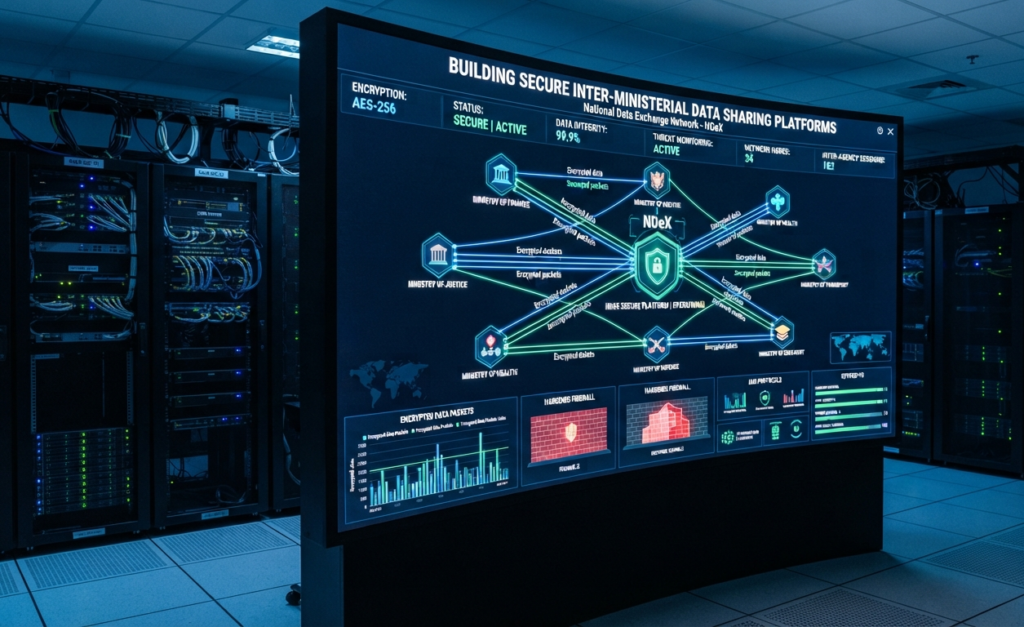
Secure Inter Ministerial Data Sharing Platforms 2

Building Secure Inter-Ministerial Data Sharing Platforms

Building Secure Inter-Ministerial Data Sharing Platforms Modern governments depend heavily on data coordination across ministries, agencies, security operations, healthcare systems, border control, financial institutions, telecommunications infrastructure, and public administration platforms. Without secure inter-ministerial data sharing, governments often struggle with fragmented operations, delayed decision-making, duplicated systems, and limited national visibility. Artificial intelligence, digital governance platforms, procurement […]

Building Secure Inter-Ministerial Data Sharing Platforms Read More »
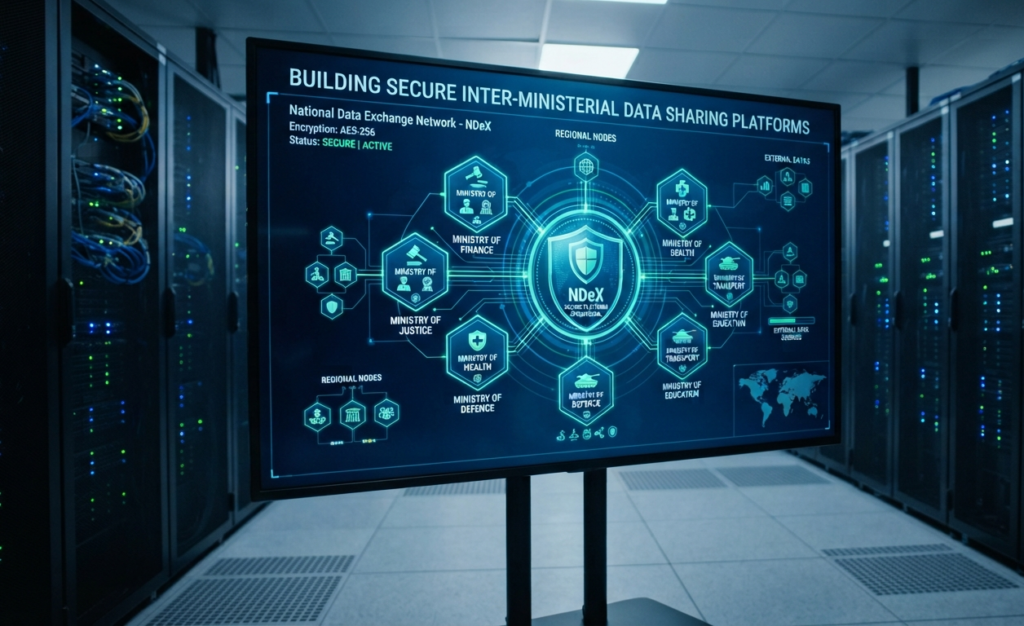
Secure Inter Ministerial Data Sharing Platforms 1

Why African Governments Need Unified Intelligence Dashboards

Why African Governments Need Unified Intelligence Dashboards Modern governments operate across highly interconnected digital, operational, and geopolitical environments. Border security, cyber threats, public safety, financial monitoring, telecommunications activity, infrastructure protection, and emergency coordination now generate enormous volumes of fragmented data every second. Without centralized intelligence visibility, critical threats can remain hidden across disconnected systems. Artificial

Why African Governments Need Unified Intelligence Dashboards Read More »

header blog digital sov en

Why National Digital Sovereignty Is a Security Issue

Why National Digital Sovereignty Is a Security Issue National security is no longer defined only by military strength, physical borders, or energy infrastructure. In modern societies, digital infrastructure controls communication systems, financial operations, government services, intelligence environments, transportation networks, and critical operational data. As a result, digital sovereignty has become a direct national security issue.

Why National Digital Sovereignty Is a Security Issue Read More »

Border Security PS2400

How Modern Governments Track Security Threats Across Borders

How Modern Governments Track Security Threats Across Borders Modern security threats no longer operate within geographic boundaries. Cyber attacks, financial crime, terrorism, digital espionage, coordinated disinformation, and organized criminal networks increasingly function across multiple countries simultaneously, forcing governments to build intelligence systems capable of tracking threats beyond traditional borders. Governments today rely on interconnected intelligence

How Modern Governments Track Security Threats Across Borders Read More »

6953e7c3833d4e5d7f0a09be how cyber security monitoring works

What Is Cyber Security Monitoring?

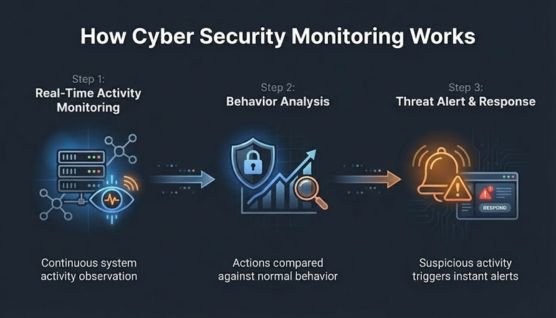
What Is Cyber Security Monitoring? Cyber security monitoring is the continuous process of observing, analyzing, and responding to digital activity across systems, applications, APIs, infrastructure, and user environments to detect threats before they escalate into operational compromise. Most organizations today operate across fragmented digital environments that include cloud services, APIs, internal systems, employee devices, external

What Is Cyber Security Monitoring? Read More »

unnamed

Building Real-Time Threat Monitoring Systems for Governments

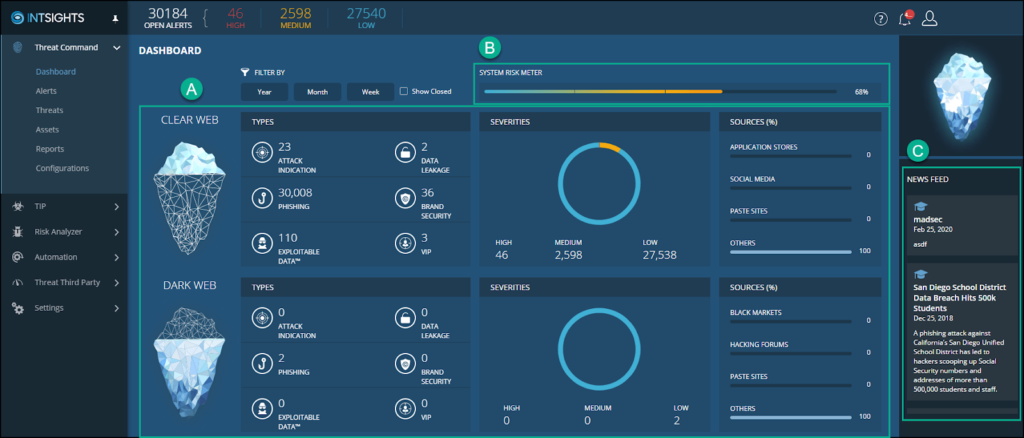
Building Real-Time Threat Monitoring Systems for Governments Modern governments can no longer rely on delayed reporting, fragmented monitoring tools, or reactive security operations. National resilience increasingly depends on real-time threat visibility across digital infrastructure, communications networks, public systems, and critical services. Real-time threat monitoring systems function as continuous national surveillance and defense layers designed to

Building Real-Time Threat Monitoring Systems for Governments Read More »

images 3

Why National Security Starts With Software Infrastructure

Why National Security Starts With Software Infrastructure Modern nations are no longer secured only by borders, military assets, or physical surveillance. National stability now depends on the integrity, control, and resilience of the software systems operating beneath government, finance, communications, energy, and public infrastructure. Every modern institution runs on software infrastructure. Banking systems, telecommunications, transportation

Why National Security Starts With Software Infrastructure Read More »

ezgif.com webp maker 12

Sovereign Application Layer Policy Filtering for National Digital Control

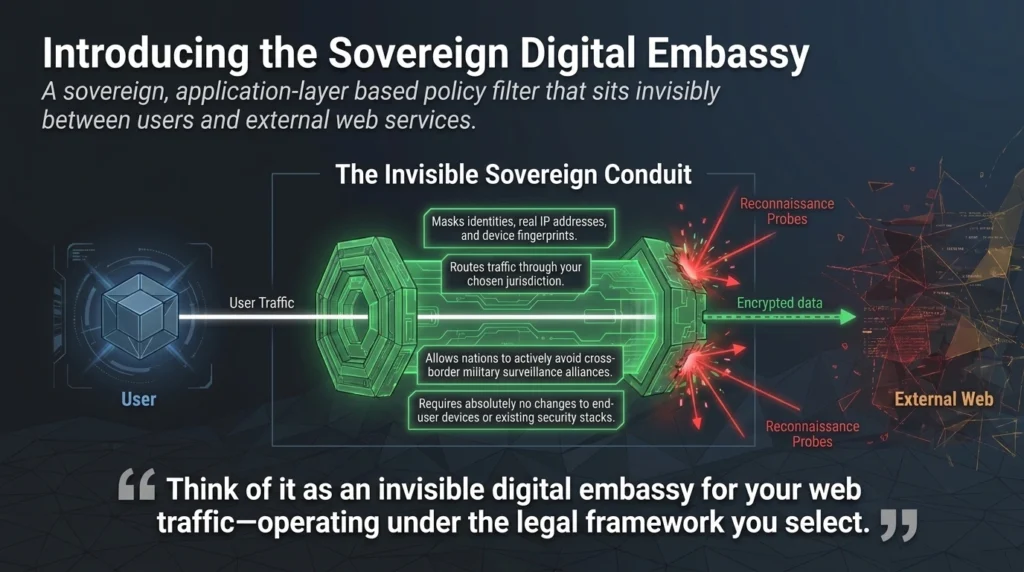
Sovereign Application Layer Policy Filtering for National Digital Control Modern digital sovereignty is no longer achieved solely through infrastructure ownership. True control now exists at the application layer — where requests, data flows, user behavior, and external platform interactions are continuously governed in real time. A sovereign application-layer policy filter functions as an invisible enforcement

Sovereign Application Layer Policy Filtering for National Digital Control Read More »

ezgif.com webp maker 11

Six Core Pillars of Sovereign Digital Protection

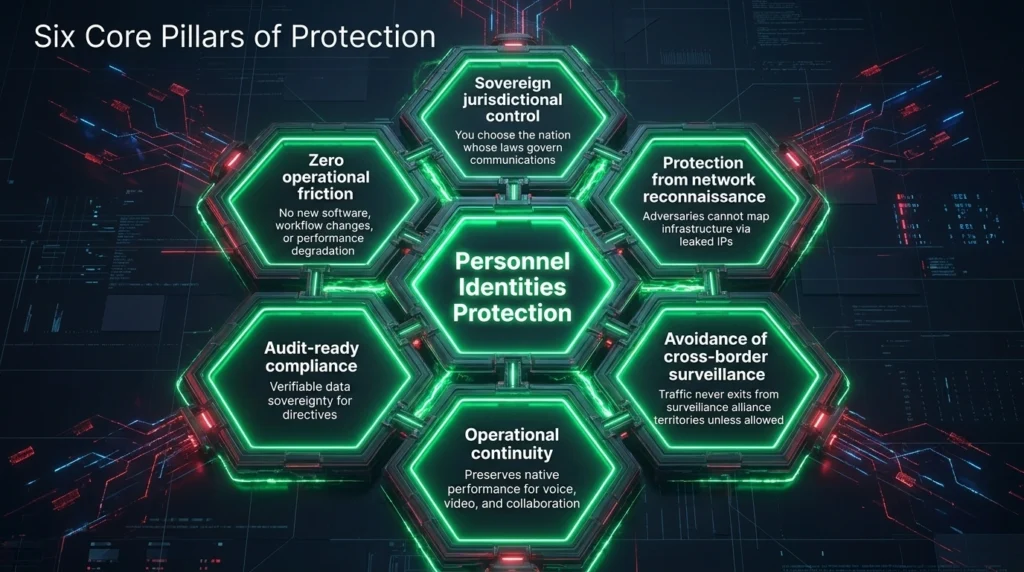
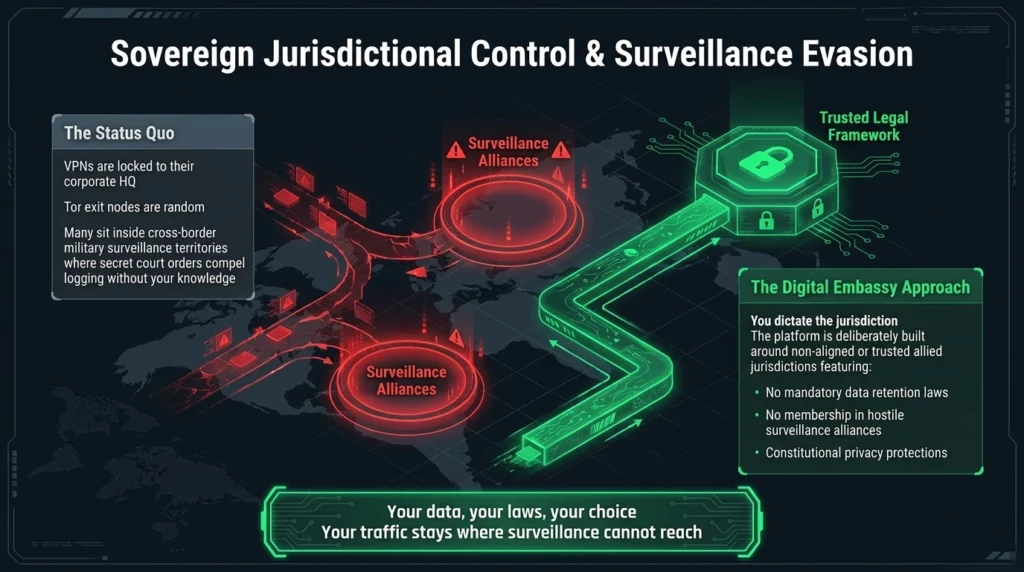
Six Core Pillars of Sovereign Digital Protection A national-grade security architecture is not built on tools. It is built on structural control, continuity, and elimination of external dependency across all digital layers. 1. Sovereign Jurisdictional Control National systems must operate strictly under domestic legal and infrastructural authority. This ensures full control over communications, data residency,

Six Core Pillars of Sovereign Digital Protection Read More »

Scroll to Top