Featured Posts

1770630417427

The Technology Behind Modern Intelligence Operations

The Technology Behind Modern Intelligence Operations Modern intelligence operations increasingly rely on advanced digital infrastructure, artificial intelligence, real-time analytics, cybersecurity systems, and large-scale data processing technologies capable of operating across highly interconnected global environments. Intelligence agencies no longer operate exclusively through traditional human intelligence methods. Today’s operational environments depend heavily on digital surveillance systems, cyber […]

The Technology Behind Modern Intelligence Operations Read More »
ezgif.com webp maker 13

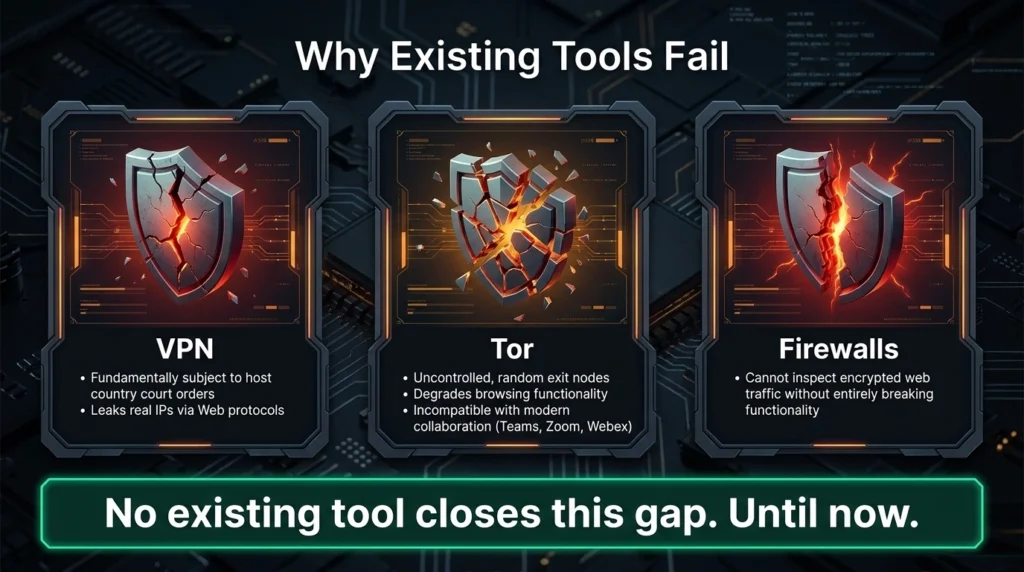
Why VPNs, Firewalls, and Tor Still Fail to Stop Modern Cyber Threats

Why VPNs, Firewalls, and Tor Still Fail to Stop Modern Cyber Threats Security tools fail when organizations mistake isolated protection layers for complete security architecture. Modern cyber threats exploit behavioral gaps, application logic, human trust, and operational complexity far beyond network-level defenses. VPNs, firewalls, and anonymity networks were designed to solve specific security problems. A

Why VPNs, Firewalls, and Tor Still Fail to Stop Modern Cyber Threats Read More »

ezgif.com webp maker 12

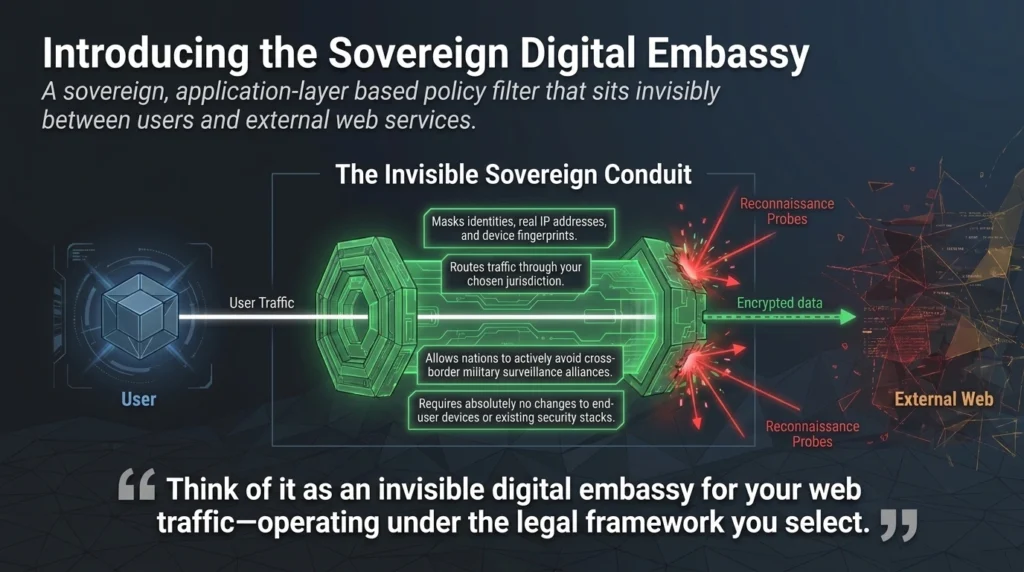
Sovereign Application Layer Policy Filtering for National Digital Control

Sovereign Application Layer Policy Filtering for National Digital Control Modern digital sovereignty is no longer achieved solely through infrastructure ownership. True control now exists at the application layer — where requests, data flows, user behavior, and external platform interactions are continuously governed in real time. A sovereign application-layer policy filter functions as an invisible enforcement

Sovereign Application Layer Policy Filtering for National Digital Control Read More »

3676d230 e842 4c07 89ef

How African Nations Can Modernize Intelligence Operations With Technology

How African Nations Can Modernize Intelligence Operations With Technology Intelligence modernization is no longer a luxury upgrade. It is a structural shift from fragmented legacy systems to unified, AI-driven national security ecosystems built for speed, accuracy, and resilience. 1. Unified National Intelligence Data Infrastructure Modern intelligence operations begin with consolidation. Data from border control, law

How African Nations Can Modernize Intelligence Operations With Technology Read More »

ezgif.com webp maker 11

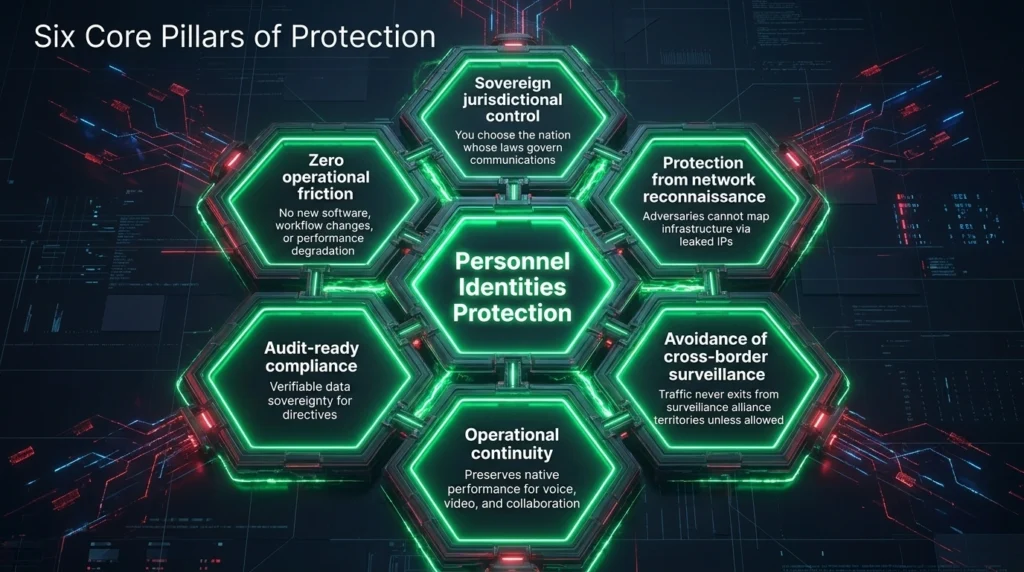
Six Core Pillars of Sovereign Digital Protection

Six Core Pillars of Sovereign Digital Protection A national-grade security architecture is not built on tools. It is built on structural control, continuity, and elimination of external dependency across all digital layers. 1. Sovereign Jurisdictional Control National systems must operate strictly under domestic legal and infrastructural authority. This ensures full control over communications, data residency,

Six Core Pillars of Sovereign Digital Protection Read More »

ezgif.com webp maker 10

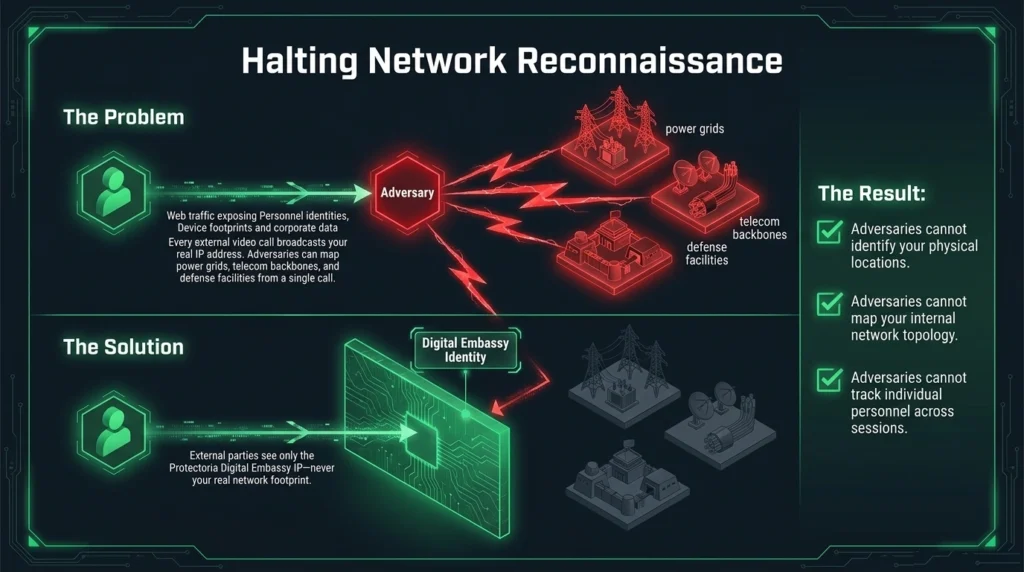
Halting Network Reconnaissance in Critical Government Infrastructure

Halting Network Reconnaissance in Critical Government Infrastructure Preventing early-stage network mapping is one of the most effective ways to reduce exposure of government systems to coordinated cyber threats. Network reconnaissance is the initial phase of most cyber intrusions. It involves mapping infrastructure, identifying exposed services, and profiling system behavior before exploitation attempts begin. In government

Halting Network Reconnaissance in Critical Government Infrastructure Read More »

section 08

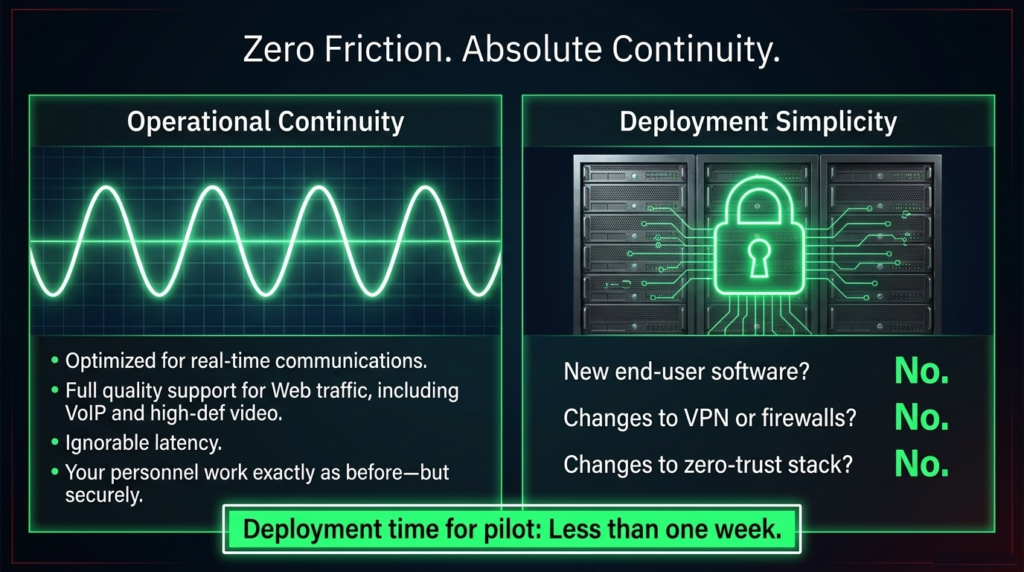
Zero Friction. Absolute Continuity in Government Digital Infrastructure

Zero Friction. Absolute Continuity in Government Digital Infrastructure National systems fail quietly when data flow, authentication, and service delivery are interrupted across ministries, borders, and legacy platforms. Government infrastructure is often designed as disconnected systems stitched together over time. Each integration adds delay, failure points, and operational overhead. Zero friction architecture removes unnecessary barriers between

Zero Friction. Absolute Continuity in Government Digital Infrastructure Read More »

Gap No One Talks About

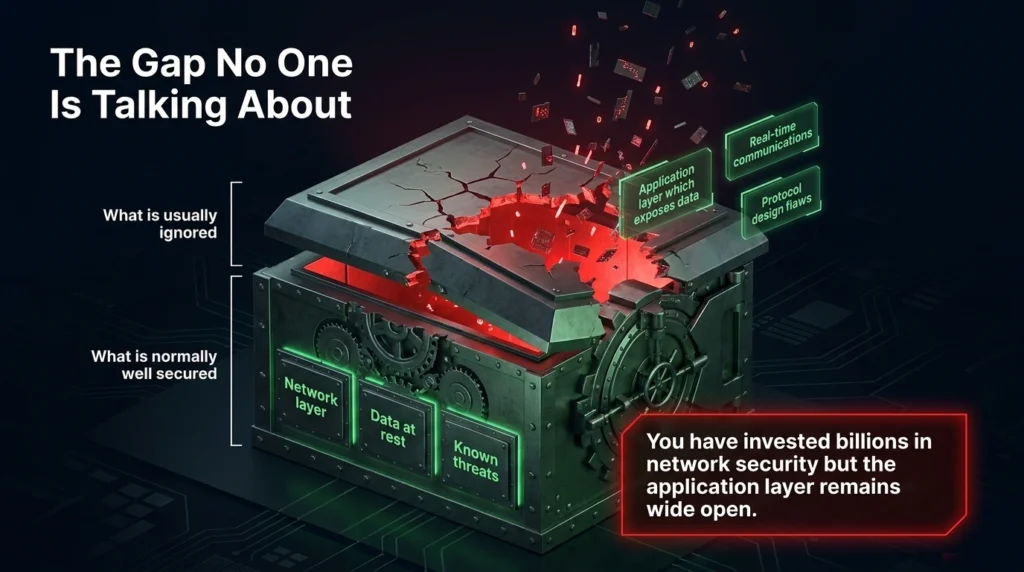
The Gap No One Talks About in Government Digital Infrastructure

The Gap No One Talks About in Government Digital Infrastructure The most dangerous weakness in national systems is not hacking or malware. It is the silent architectural gap between ownership, operation, and control. Most governments believe they have “digitized” their services once software is deployed. In reality, deployment is not ownership. The hidden gap appears

The Gap No One Talks About in Government Digital Infrastructure Read More »

the operational reality of identity data leakages

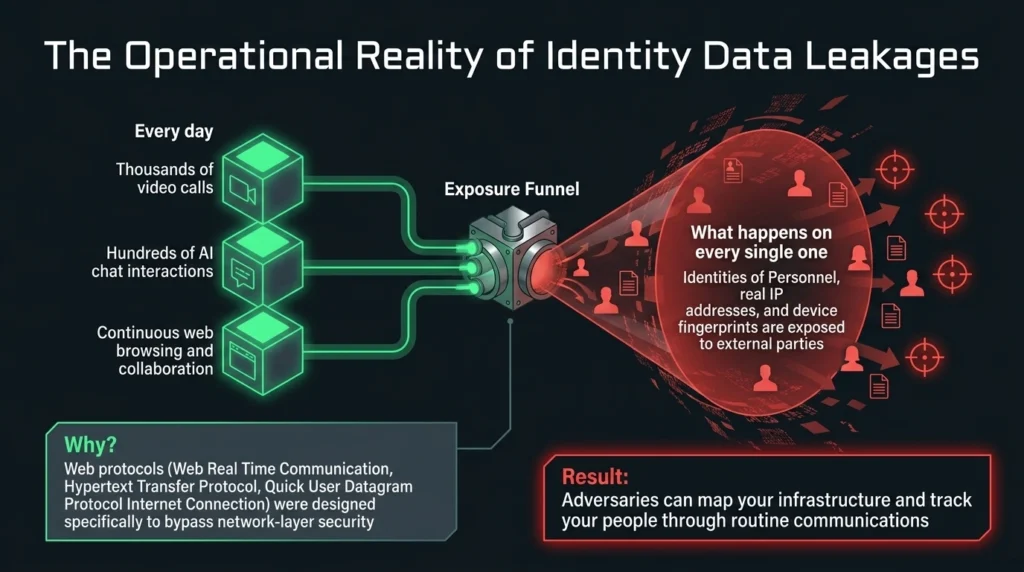
The Operational Reality of Identity Data Leakages

The Operational Reality of Identity Data Leakages Identity data leaks are not abstract cyber risks. They are recurring operational failures caused by disconnected government networks, loose internal permissions, and unmonitored vendor systems. National identity systems now sit at the center of government operations, powering passports, visas, taxation, healthcare, and border control. When these core systems

The Operational Reality of Identity Data Leakages Read More »

images 2

Africa Doesn’t Need to Keep Renting Broken Systems from Foreign Vendors

Africa Doesn’t Need to Keep Renting Broken Systems from Foreign Vendors Digital sovereignty begins when nations stop depending entirely on external systems to operate their future. For decades, African governments, embassies, and public institutions have been told the same lie: “Only European companies can build secure governmental systems.” That lie has cost African nations millions.

Africa Doesn’t Need to Keep Renting Broken Systems from Foreign Vendors Read More »

Scroll to Top